
Hair fall is one of the most emotionally distressing health concerns affecting millions of people across Pakistan. Whether it is clumps of hair on the pillow every morning, a thinning hairline, or visible scalp showing through once-thick hair — the experience is unsettling regardless of age or gender.
The search for how to stop hair fall naturally is among the most common health queries across Pakistan — and with good reason. People are increasingly aware that harsh chemical treatments carry side effects, that pharmaceutical options are expensive and often impractical for long-term use, and that nature offers genuinely effective alternatives when understood and applied correctly.
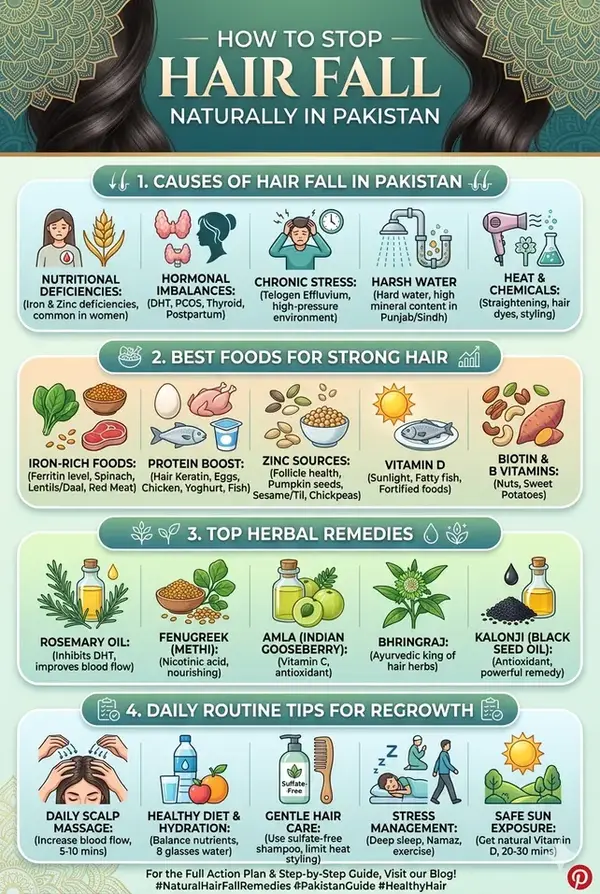
This guide takes a comprehensive, science-backed approach to natural hair fall prevention. It covers the root causes of hair fall specific to the Pakistani context, the nutritional interventions that make the most difference, the most effective herbal remedies with documented evidence, scalp care practices, and a structured action plan you can start today.
No miracle claims. No exaggeration. Just accurate, complete information.
Why Hair Falls – Understanding Root Causes Before Treatment
Before learning how to stop hair fall naturally, it is essential to understand why hair falls in the first place. Treating symptoms without understanding causes produces temporary results at best.
How to stop hair fall naturally? The Hair Growth Cycle and Where It Goes Wrong
Every strand of hair on your scalp follows a three-phase biological cycle:
The anagen phase is the active growth period, lasting 2–7 years for scalp hair. The longer this phase, the longer your hair grows. The catagen phase is a brief transitional period of approximately 2–3 weeks where growth stops and the follicle shrinks. The telogen phase is the resting period lasting 3–4 months, after which the hair sheds naturally and a new anagen phase begins.
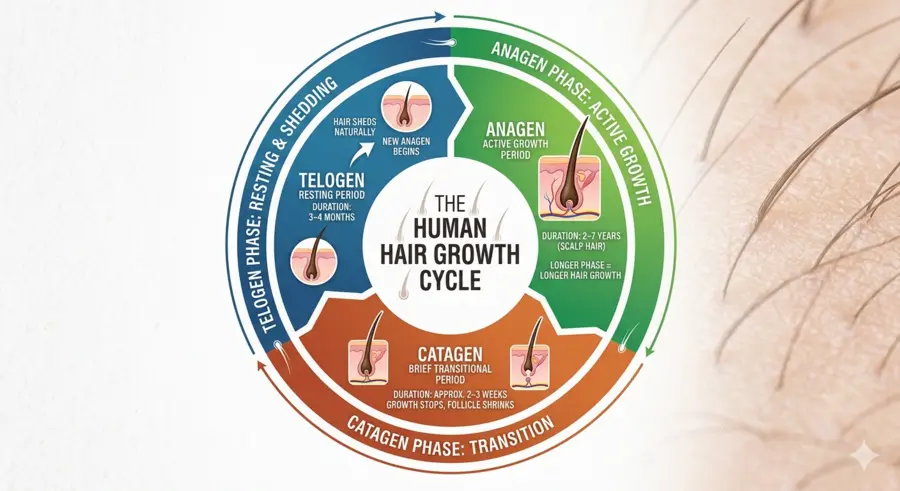
In a healthy scalp, approximately 85–90% of follicles are in anagen at any given time, with only 10–15% resting and shedding. This is why losing 50–100 hairs daily is considered normal — these are telogen hairs completing their cycle.
Hair fall becomes a problem when this balance is disrupted — when more follicles enter the resting and shedding phase than the growing phase, or when the anagen phase shortens, or when follicles permanently miniaturise and stop producing hair altogether.
Common Causes of Hair Fall in Pakistan
Understanding what triggers this disruption in the Pakistani context is essential for choosing the right natural remedy.
Nutritional deficiencies are the single most prevalent cause of hair fall in Pakistan. Iron deficiency anaemia affects a significant proportion of Pakistani women of reproductive age. Zinc deficiency is widespread due to dietary patterns that rely heavily on refined grains and pulses that inhibit zinc absorption through their phytate content. Biotin, Vitamin D, and Protein deficiencies are also commonly implicated.
Hormonal imbalances drive a large proportion of hair fall cases. In men, dihydrotestosterone (DHT) — a derivative of testosterone — causes the progressive miniaturisation of genetically sensitive follicles, producing the characteristic receding hairline and crown thinning of androgenetic alopecia. In women, hormonal fluctuations related to polycystic ovarian syndrome (PCOS), thyroid disorders, postpartum hormonal shifts, and menopause are leading causes. PCOS affects an estimated 12–18% of Pakistani women of reproductive age, making it one of the most significant contributors to female hair fall in this population.
Chronic psychological and physiological stress triggers a condition called telogen effluvium — a diffuse, generalised hair shedding that typically occurs 2–3 months after a significant stressor. This delay between trigger and shedding means many people do not recognise the connection. Pakistan’s rapidly urbanising, high-pressure social and economic environment makes stress-related hair fall exceptionally common, particularly in cities.
Scalp conditions including dandruff (seborrhoeic dermatitis caused by Malassezia yeast overgrowth), fungal infections, and scalp psoriasis create chronic inflammation around follicles that restricts growth and causes reactive shedding.
Hard water is a critically underappreciated cause of hair fall in Pakistan, particularly in Punjab and Sindh. High calcium and magnesium mineral content deposits on the scalp, clogs follicle openings, disrupts pH balance, and causes mechanical damage to the hair shaft — collectively weakening hair and increasing breakage and fall.
Excessive heat and chemical damage from straightening, blow-drying, and chemical treatments including hair dyes and relaxers progressively damage the hair shaft and, with prolonged use, can damage follicle structure itself.
Rapid weight loss — whether through intentional dieting or illness — causes telogen effluvium through the physiological shock of caloric restriction and micronutrient depletion.
Nutritional Deficiencies and Hair Fall – What to Eat to Stop Hair Fall Naturally
Diet is the most powerful and most overlooked natural intervention for stopping hair fall. No herbal oil or topical treatment can compensate for a nutritionally depleted body — the follicle requires a continuous supply of specific micronutrients to maintain the anagen phase.
Iron – The Most Critical Nutrient for Hair Fall in Pakistani Women
Iron deficiency is the most common nutritional cause of hair fall globally, and in Pakistan specifically it is epidemic among women. The follicle is one of the body’s most metabolically active structures and is highly sensitive to reduced oxygen delivery that accompanies iron deficiency.
Ferritin — the iron storage protein — is the most reliable indicator of iron status for hair health. Studies suggest that ferritin levels below 30 ng/mL are associated with increased hair shedding even in the absence of clinical anaemia. Many Pakistani women with “normal” haemoglobin levels have depleted ferritin stores that are silently driving hair fall.
Iron-rich foods to prioritise: red meat, chicken liver, mutton, spinach (with Vitamin C for absorption), lentils (daal), kidney beans (rajma), chickpeas, and dried apricots. Avoid drinking chai immediately after iron-rich meals — the tannins in tea significantly inhibit iron absorption.
Protein – The Building Block of Every Hair Strand
Hair is composed of approximately 90% keratin — a structural protein. Inadequate dietary protein directly reduces hair production because the body diverts limited protein to essential organs first, leaving follicles with insufficient amino acids to maintain the hair growth cycle.
The daily protein requirement for hair health is approximately 0.8–1.0 grams per kilogram of body weight. For a 60kg woman, this means 48–60 grams of protein daily — an amount many Pakistanis fall short of due to plant-heavy diets without adequate complementary protein combinations.
Best protein sources in the Pakistani diet: eggs (particularly the most bioavailable protein source), chicken, fish, daal with rice (a complete amino acid combination), yoghurt, and paneer. For vegetarians, combining lentils with grains at each meal ensures complete essential amino acid intake.
Zinc – The Follicle Regulator
Zinc is essential for DNA synthesis in follicle cells, sebaceous gland function, and the conversion of thyroid hormones — all critical for maintaining healthy hair growth. Zinc deficiency causes diffuse hair thinning and has been documented in numerous hair loss studies.
Pakistan’s staple diet is high in whole grains and pulses that contain phytic acid — which binds zinc and significantly reduces its bioavailability. Soaking and fermenting legumes before cooking substantially reduces phytate content and improves zinc absorption.
Zinc-rich foods: meat, shellfish (where available), pumpkin seeds, sesame seeds (til), chickpeas, and cashews. Consider that plant-source zinc is significantly less bioavailable than animal-source zinc.
Vitamin D – The Sunshine Vitamin Most Pakistanis Lack
Paradoxically, despite Pakistan’s abundant sunshine, Vitamin D deficiency is extremely prevalent — estimated to affect 70–80% of the Pakistani population due to indoor lifestyles, protective clothing, and dark skin pigmentation that reduces UV absorption. Vitamin D receptors are present on follicle cells, and Vitamin D deficiency has been correlated with several forms of alopecia.
Safe sun exposure of 20–30 minutes daily to exposed arms and face (not through glass) between 10am–2pm is the most effective natural source. Fatty fish, eggs, and fortified foods provide dietary Vitamin D.
Biotin – Important but Overrated
Biotin (Vitamin B7) is essential for keratin production and has become enormously popular in hair supplement marketing. However the clinical evidence is clear: biotin supplementation only benefits those with documented biotin deficiency — which is actually relatively uncommon. If your biotin levels are normal, additional biotin will not accelerate hair growth. Eggs, nuts, seeds, and sweet potatoes are good natural sources.
Top Herbs to Stop Hair Fall Naturally – Evidence-Based Guide
Rosemary – The Most Clinically Proven Herb for Hair Fall
Rosemary (Salvia rosmarinus) contains ursolic acid which inhibits 5-alpha reductase — the enzyme that converts testosterone to DHT, the primary driver of pattern hair loss. A landmark 2015 clinical trial published in SKINmed Journal demonstrated that rosemary oil performed comparably to 2% minoxidil for hair count increase over 6 months, with significantly less scalp irritation.
For stopping hair fall naturally, rosemary essential oil diluted in a carrier oil (3–5 drops per tablespoon) applied to the scalp 2–3 times weekly is the most evidence-supported topical herbal intervention available.
Rosemary-for-hair-growth — See our complete scientific guide to rosemary for hair growth
Ashwagandha – The Stress-Hair Connection Herb
Ashwagandha (Withania somnifera) addresses one of the most prevalent causes of hair fall in Pakistan — chronic stress. As an adaptogen, it reduces cortisol levels — the primary stress hormone that triggers telogen effluvium. Research published in the Journal of the International Society of Sports Nutrition demonstrated that ashwagandha supplementation significantly reduced serum cortisol levels compared to placebo over 60 days.
High cortisol prematurely pushes follicles from the anagen (growth) phase into the telogen (shedding) phase. By modulating the stress response, ashwagandha addresses hair fall at its hormonal root cause rather than managing symptoms topically.
[LINK: ashwagandha-for-hair-growth] — Complete guide to ashwagandha for hair growth and fall prevention
Fenugreek (Methi) – Pakistan’s Most Accessible Hair Herb
Fenugreek seeds (Trigonella foenum-graecum) — methi dana in Urdu — contain nicotinic acid and protein precursors that directly nourish hair follicles. They also contain diosgenin, a phytoestrogen that may help counteract androgenic effects on sensitive follicles. A study published in the International Journal of Medical Research & Health Sciences found significant improvement in hair volume and scalp coverage after 6 months of fenugreek seed extract use.
As a kitchen staple in Pakistani households, fenugreek is the most accessible and culturally familiar natural remedy for hair fall available.
[LINK: fenugreek-for-hair-growth] — Complete guide to fenugreek (methi) for hair growth and fall
Amla (Indian Gooseberry) – The Vitamin C Powerhouse
Amla (Phyllanthus emblica) contains the highest natural concentration of Vitamin C of any food — approximately 20 times that of an orange — in a uniquely stable, tannin-bound form that does not degrade with heat. Vitamin C is essential for collagen synthesis, and collagen forms the structural matrix in which follicles are embedded in the scalp dermis.
Amla also demonstrates 5-alpha reductase inhibitory activity similar to rosemary, providing additional protection against DHT-driven hair loss.
Bhringraj – The Ayurvedic King of Hair Herbs
Bhringraj (Eclipta alba) has been used in Ayurvedic medicine specifically for hair restoration for over two thousand years. Modern research has validated its traditional use — a study published in Archives of Dermatological Research demonstrated that bhringraj extract stimulated hair follicle regeneration in mouse models, outperforming minoxidil in some parameters.
The active compound wedelolactone promotes follicle cell proliferation and extends the anagen growth phase — making bhringraj one of the most scientifically credible Ayurvedic herbs for hair fall.
Kalonji (Black Seed) – The Prophetic Remedy
Black seed (Nigella sativa) — kalonji in Urdu — carries deep cultural significance in Pakistan, referenced in Islamic tradition as a remedy for every illness except death. Modern science has identified thymoquinone as its primary active compound, which demonstrates potent antioxidant and anti-inflammatory activity. A randomised controlled trial published in the Journal of Dermatology & Dermatologic Surgery found that topical black seed oil significantly increased hair density over 3 months compared to placebo.
How to Stop Hair Fall Naturally at Home – Scalp Care Protocol
Scalp Massage to Increase Blood Flow and Stop Hair Fall
Scalp massage is one of the most underutilised and evidence-supported natural interventions for hair fall. A 2016 study published in ePlasty found that standardised scalp massage over 24 weeks significantly increased hair thickness — even without any topical treatment applied.
The mechanism is clear: mechanical stimulation increases blood flow to dermal papilla cells at the base of follicles, delivering more oxygen and nutrients while removing metabolic waste products. Additionally, the stretching forces applied during massage have been shown to directly stimulate follicle cell proliferation.
Correct scalp massage technique: Use the pads — not the nails — of all ten fingers. Apply medium pressure in small circular motions, covering the entire scalp systematically from the hairline to the nape. Continue for a minimum of 5 minutes daily — 10 minutes is optimal. This can be done with or without oil, though applying a herbal oil simultaneously maximises benefit. Consistency over months, not weeks, produces results.
Scalp pH and Hard Water – The Hidden Hair Fall Trigger
The healthy scalp maintains a slightly acidic pH of approximately 4.5–5.5. This acidic environment maintains the protective acid mantle that prevents microbial overgrowth, keeps the cuticle closed and smooth, and supports the sebaceous gland function that lubricates follicles.
Hard water, harsh shampoos, and alkaline hair products all disrupt this pH balance, creating an environment where Malassezia thrives, cuticles open and break, and follicular inflammation develops.
Natural pH restoration: An apple cider vinegar rinse (1 tablespoon in 500ml water as a post-shampoo rinse, not rinsed out) restores acidic pH naturally. Rosemary tea rinse similarly maintains a healthy acidic scalp environment.
Choosing the Right Shampoo to Stop Hair Fall Naturally
Many commercially available shampoos in Pakistan contain sodium lauryl sulphate (SLS) and sodium laureth sulphate (SLES) as primary foaming agents. These surfactants are highly effective at removing oil but are also aggressive enough to strip the scalp’s protective sebum layer, disrupt pH, and with frequent use cause chronic scalp irritation that drives reactive hair shedding.
Look for sulphate-free shampoos, or those with gentler surfactants such as cocamidopropyl betaine or sodium cocoyl isethionate. Limit washing to 2–3 times per week maximum — overwashing removes sebum and stimulates excess sebum production in a damaging cycle.
How Often to Oil Your Hair to Prevent Hair Fall
Herbal oiling is one of the most deeply embedded traditions in Pakistani hair care, and the science supports it. Coconut oil in particular has been shown in multiple studies to reduce protein loss from the hair shaft — both before and after washing — due to its low molecular weight and linear chain structure that allows it to penetrate the cortex. No other commonly available oil achieves this level of penetration.
Oiling frequency: 2–3 times per week for those with dry scalp. Once weekly for oily scalp types. Overnight oiling before washing is more effective than brief pre-wash application.
How to stop hair fall naturally? Lifestyle Changes That Stop Hair Fall Naturally
Sleep – The Overlooked Hair Growth Hormone
Growth hormone — which plays a direct role in maintaining the anagen phase of hair growth — is secreted primarily during deep sleep, specifically during slow-wave sleep cycles occurring in the first half of the night. Chronic sleep deprivation suppresses growth hormone secretion, elevates cortisol, and creates the hormonal profile most conducive to hair fall.
Seven to nine hours of quality sleep is not a luxury for hair health — it is a biological requirement. Prioritising consistent sleep timing is one of the most impactful and zero-cost natural interventions available.
Water Intake and Hair Fall
Mild chronic dehydration is extremely common and rarely recognised as a contributor to hair fall. The hair shaft is approximately 25% water — dehydration makes hair brittle, reduces shine, and increases mechanical breakage. More significantly, dehydration impairs nutrient delivery through blood circulation to scalp follicles.
Eight to ten glasses of water daily — adjusted upward for Pakistan’s hot climate and physical activity — supports optimal follicle function.
Stress Management to Stop Hair Fall Naturally
Given the prevalence of stress-related telogen effluvium in Pakistan, stress management deserves dedicated attention rather than a brief mention. The following evidence-based approaches are the most effective:
Structured physical exercise — even 30 minutes of moderate-intensity walking daily — has been shown in multiple studies to reduce cortisol levels and increase DHEA, creating a hormonal environment less conducive to hair fall. Exercise also improves scalp circulation as a secondary benefit.
Namaz and meditative practices have documented physiological effects on the autonomic nervous system — reducing sympathetic (fight-or-flight) activation and increasing parasympathetic tone. Regular practice demonstrably reduces cortisol levels.
Social connection and support is a powerful stress buffer — isolation amplifies the physiological stress response while connection moderates it.
A Step-by-Step Natural Hair Fall Treatment Plan for Pakistan
This protocol synthesises the evidence above into a practical, actionable plan. Consistency over 3–6 months is the minimum timeframe for meaningful results — hair biology does not respond to short-term interventions.
Daily: Start the day with a high-protein breakfast — two eggs with whole grain bread provides both complete protein and B vitamins. Take a 20-minute outdoor walk for Vitamin D and stress reduction. Drink minimum eight glasses of water. Perform 5–10 minutes of scalp massage (with or without oil). Sleep 7–9 hours at consistent times.
Three times weekly: Apply rosemary essential oil (3–5 drops) diluted in coconut or sesame oil to the scalp. Leave for minimum 2 hours or overnight. Wash with a sulphate-free shampoo. Rinse with cool or lukewarm water — hot water opens cuticles and increases breakage.
Weekly: Apply a deep conditioning fenugreek hair mask — soak 2 tablespoons of methi seeds overnight in water, grind to a paste, mix with yoghurt, apply to scalp and hair for 30 minutes before washing. This provides protein, nicotinic acid, and moisture simultaneously.
Dietary adjustments (ongoing): Reduce refined carbohydrate intake — high glycaemic foods spike insulin, which increases androgen production and DHT activity. Increase iron-rich foods, particularly if you are a woman of reproductive age. Avoid chai immediately after iron-rich meals. Include a source of zinc-rich food daily.
When Natural Methods Are Not Enough – Know When to Seek Help
Natural remedies for hair fall are genuinely effective for the vast majority of causes — nutritional, stress-related, scalp condition-related, and early-stage androgenetic hair loss. However, natural interventions have real limitations that must be acknowledged honestly.
Seek medical evaluation if:
Hair fall is sudden and severe — losing significantly more than 100 hairs daily represents a meaningful threshold. Hair fall is accompanied by systemic symptoms — fatigue, unexplained weight change, irregular menstrual cycles, skin changes, or joint pain. Bald patches are appearing — this pattern suggests alopecia areata, an autoimmune condition requiring medical management. Hair fall has not responded to consistent natural intervention over 6 months. A visible, progressive receding hairline or crown thinning suggests significant androgenetic alopecia that may benefit from pharmaceutical or procedural intervention alongside natural approaches.
A dermatologist or trichologist can perform a proper trichoscopy examination and blood panel — including ferritin, thyroid function, androgens, zinc, and Vitamin D — that identifies the specific cause and allows targeted treatment.
Key Takeaways – How to Stop Hair Fall Naturally
- Hair fall has multiple causes — identify yours before choosing a treatment approach
- Nutritional deficiencies, particularly iron, protein, zinc, and Vitamin D, are the most prevalent causes in Pakistan and are fully addressable through diet
- Rosemary, ashwagandha, fenugreek, amla, and kalonji are the most evidence-supported natural herbs for hair fall
- Daily scalp massage increases blood flow to follicles and has been shown to increase hair thickness independently
- Hard water is an underrecognised cause — apple cider vinegar rinses restore healthy scalp pH
- Sulphate-free shampoos, reduced washing frequency, and herbal oiling 2–3 times weekly protect the scalp environment
- Sleep, stress management, and hydration are non-negotiable foundations — no topical treatment compensates for their absence
- Consistent natural intervention over 3–6 months is required — premature discontinuation is the most common reason natural remedies appear not to work
Frequently Asked Questions – How to Stop Hair Fall Naturally Pakistan
How long does it take to stop hair fall naturally?
Natural interventions require a minimum of 3–6 months of consistent application before meaningful reduction in shedding is typically observed. This reflects the biology of the hair growth cycle — the anagen phase that produces visible new growth takes months to strengthen. Most people who report that natural remedies “did not work” discontinued before this threshold. Set a 6-month commitment before evaluating results.
Which oil is best to stop hair fall naturally in Pakistan?
The most evidence-supported oil for reducing hair fall is rosemary essential oil diluted in a carrier oil — supported by a 2015 clinical trial showing equivalence to 2% minoxidil. Coconut oil is the best carrier for follicle protection due to its unique ability to penetrate the hair shaft and reduce protein loss. Kalonji (black seed) oil has strong evidence from a randomised controlled trial showing significant hair density improvement. A combination of these in an infused herbal oil provides the broadest spectrum of benefit.
Can stopping hair fall naturally work for men with pattern baldness?
Natural methods can slow and in some cases partially reverse early-stage androgenetic alopecia in men by reducing DHT activity (through rosemary’s ursolic acid and amla’s 5-alpha reductase inhibition), improving scalp circulation, and optimising nutritional status. However, advanced pattern baldness with significant follicle miniaturisation over many years is unlikely to respond meaningfully to topical natural interventions alone. Early intervention produces significantly better results.
Is hair fall during shower or combing normal?
Losing 50–100 hairs during washing and combing is normal and represents hairs completing their natural telogen (shedding) phase. Hair appears to fall more during washing because the water and mechanical action dislodge hairs that were already in the telogen phase. If you are consistently losing visibly more than this, or noticing thinning, parting widening, or scalp visibility, this warrants attention.
Can diet alone stop hair fall naturally?
For hair fall caused primarily by nutritional deficiency — particularly iron, protein, or zinc deficiency — dietary correction alone can be highly effective and may be the only intervention needed. For hair fall with hormonal, genetic, or scalp-related causes, diet creates a supportive foundation but should be combined with targeted herbal and topical interventions.
Does stress really cause hair fall?
Yes, and the mechanism is well-established. Chronic elevated cortisol — the primary stress hormone — prematurely drives follicles from the active growth phase (anagen) into the resting and shedding phase (telogen). The resulting hair fall typically appears 2–3 months after the stressor, which is why the connection is often not recognised. Managing stress is not supplementary to hair fall treatment — for stress-related telogen effluvium, it is the primary treatment.
How to stop hair fall naturally at home without expensive products?
The most effective zero-cost or low-cost natural interventions are: daily 5–10 minute scalp massage (free), dietary correction focusing on iron and protein-rich foods (minimal cost within normal food budget), apple cider vinegar scalp rinse (very low cost), fenugreek seed hair mask (kitchen staple), and consistent sleep and stress management (free). Rosemary essential oil for topical use costs relatively little and lasts months with proper dilution. None of these require expensive products.
Which vitamin deficiency causes hair fall most commonly in Pakistan?
Based on the prevalent nutritional patterns in Pakistan, iron deficiency is the most common nutritional cause of hair fall — particularly in women of reproductive age due to menstrual losses and dietary patterns. Vitamin D deficiency follows closely, affecting an estimated 70–80% of Pakistanis despite abundant sunshine. Zinc deficiency is the third most significant, driven by phytate-heavy staple grain diets. A blood panel including ferritin, Vitamin D, and zinc provides the most targeted information for nutritional hair fall.
[LINK: rosemary-for-hair-growth] — Rosemary for hair growth: The complete scientific guide [LINK: ashwagandha-for-hair-growth] — Ashwagandha for hair growth and fall prevention [LINK: fenugreek-for-hair-growth] — Fenugreek (methi dana) for hair growth: Complete guide [LINK: herbs-for-hair-growth] — Best herbs for hair growth: The complete Ayurvedic guide [LINK: kalonji-oil-for-hair-growth] — Kalonji (black seed) oil for hair: Islamic remedy & science
Image alt text suggestions:
- common causes of hair fall in pakistan infographic nutritional stress hormonal
- natural herbs for hair fall rosemary fenugreek amla kalonji on wooden surface pakistan
- scalp massage technique to stop hair fall naturally step by step guide
- iron rich foods to stop hair fall naturally daal eggs spinach meat pakistan diet

Dr. KJ Minhas, M.Phil, DHMS (Diploma in Homeopathic Medicine and Surgery), registered practitioner with the National Council for Homeopathy (NCH) — reviews content for accuracy and safety.