
If you feel constantly stressed, tired, or unable to relax, your cortisol levels may be too high. The ashwagandha cortisol connection has become one of the most researched topics in natural health, and understanding it can help you decide whether this traditional herb is worth adding to your routine.
Used for centuries in traditional medicine, ashwagandha is supported by clinical research suggesting it may help reduce elevated stress hormones.
This guide explains how ashwagandha for stress works, what the science says, and how to use it effectively.
What Is Cortisol — And Why High Levels Are a Problem
Cortisol is your body’s primary stress hormone, produced by the adrenal glands. It’s not inherently bad — in short bursts, cortisol is essential. It sharpens your focus, gives you energy to respond to threats, and regulates your immune system.
The problem is chronically elevated cortisol. Modern life — constant deadlines, poor sleep, financial pressure, phone notifications — keeps the cortisol tap running. And sustained high cortisol creates a long list of downstream effects:
- Difficulty falling or staying asleep
- Persistent anxiety and mental tension
- Weight gain, especially around the abdomen
- Brain fog and poor concentration
- Reduced testosterone in men
- Hormonal imbalances in women (including disrupted cycles and PCOS)
- Weakened immune response
- Fatigue that doesn’t improve with rest
This is where ashwagandha enters the picture.
This guide is part of Herblo Naturals’ ongoing series on adaptogens and natural stress support — see our full Ashwagandha Root product page for sourcing and dosage details.
What Is Ashwagandha?
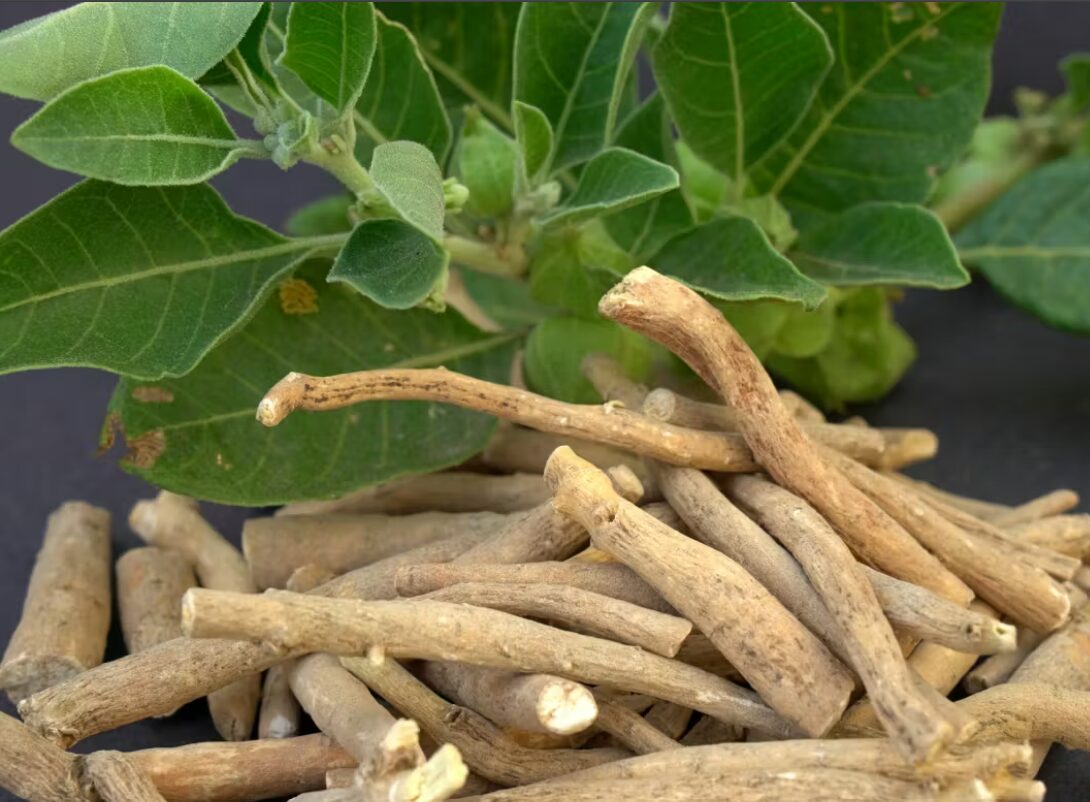
Ashwagandha (Withania somnifera) is a medicinal root herb that has been used in Ayurvedic medicine for over 3,000 years. Its Sanskrit name translates roughly to “smell of horse” — a reference to both its distinct aroma and the strength it was traditionally believed to impart.
In modern herbalism and supplement science, ashwagandha is classified as an adaptogen: a plant that helps the body adapt to physical and psychological stress. Unlike stimulants that push your system harder, adaptogens work by regulating the stress response system — helping bring an overactivated system back toward balance.
Its primary active compounds are withanolides, a class of steroidal lactones concentrated in the root. Withanolides are responsible for most of ashwagandha’s measurable effects on cortisol, anxiety, and stress physiology.
Ashwagandha Cortisol Benefits: Science-Backed Ways to Lower Stress
Ashwagandha doesn’t work through a single pathway — it targets the stress response system at multiple levels simultaneously. Here’s what the research shows.
1. It Regulates the HPA Axis
Your body’s stress response is governed by the HPA axis — the Hypothalamic-Pituitary-Adrenal axis. When you encounter a stressor, the hypothalamus signals the pituitary gland, which signals the adrenal glands to release cortisol. In chronically stressed people, this loop runs in overdrive.
Ashwagandha’s withanolides appear to act as HPA axis modulators. They help reduce the signal intensity that drives cortisol production, effectively turning down the volume on the stress response without suppressing it entirely.
2. It Inhibits Stress-Activated Pathways (HSP90)
Research has identified that withanolides bind to and inhibit Heat Shock Protein 90 (HSP90), a molecular chaperone that plays a role in activating stress-response proteins. By interfering with HSP90 activity, ashwagandha reduces downstream inflammatory and stress signaling — which in turn contributes to lower circulating cortisol.
3. It Has GABAergic Activity
Ashwagandha has been shown to enhance signaling through GABA receptors — the brain’s primary calming neurotransmitter system. Increased GABAergic activity produces a sense of mental calm, reduced overthinking, and easier sleep, without sedation.
4. It Reduces Inflammatory Signaling
Chronic stress and elevated cortisol are closely tied to inflammation. Ashwagandha has demonstrated anti-inflammatory effects through inhibition of NF-κB, a transcription factor that promotes pro-inflammatory cytokines. By reducing baseline inflammation, it further supports a calmer physiological state and reduces one of the feedback loops that keeps cortisol elevated.
Ashwagandha Cortisol Research: What the Clinical Studies Show
This isn’t just traditional medicine — ashwagandha has accumulated a meaningful body of clinical trial evidence specifically on cortisol and stress.
The landmark 2012 study by Chandrasekhar et al., published in the PubMed, was a randomized, double-blind, placebo-controlled trial. Sixty-four adults with chronic stress were given 300 mg of high-concentration ashwagandha root extract twice daily for 60 days. The ashwagandha group showed a 27.9% reduction in serum cortisol compared to a 7.9% reduction in the placebo group. Participants also reported significant improvements in stress scores, anxiety, sleep quality, and general wellbeing.
An important caveat, covered in more detail further down: this trial, like most of the cortisol research, used a concentrated root extract rather than whole root powder.
Key finding across studies: the cortisol-lowering effect of ashwagandha is consistently observed in people with elevated baseline stress — not in people with already-normal cortisol levels. This adaptogenic quality means it helps stressed people without over-suppressing a healthy stress response.
Who Benefits Most from Ashwagandha Cortisol Support
Based on both the research and traditional use, ashwagandha’s cortisol-lowering effects are most pronounced in:
People under chronic psychological stress — demanding jobs, caregiving responsibilities, long-term anxiety. This is the primary studied population and where the evidence is strongest.
People with sleep disruption tied to stress — if you can’t switch off at night, racing thoughts keep you awake, or you wake up already anxious, elevated evening cortisol is often a contributing factor.
Men with exercise-induced stress — ashwagandha has been studied in athletic populations and may help reduce cortisol elevation from intense training, which could support testosterone levels and recovery.
Women with PCOS or hormonal imbalance — elevated cortisol is closely linked to hormonal disruption. Ashwagandha’s cortisol-modulating effects may support hormonal balance, and early research on PCOS is promising.
People with fatigue and burnout — the “wired but tired” state is a hallmark of elevated cortisol. Ashwagandha may help support the natural rise-and-fall rhythm of cortisol through the day.
Ashwagandha for Stress vs. Ashwagandha for Anxiety: Is There a Difference?
Many people use these terms interchangeably, and ashwagandha addresses both — but through slightly different mechanisms.
For stress, ashwagandha acts primarily on the HPA axis and cortisol production. It reduces the physical stress load on the body, which in turn reduces the mental experience of being overwhelmed.
For anxiety, ashwagandha acts more through its GABAergic and anti-inflammatory effects — producing a calmer mental state, reducing rumination, and lowering the baseline “threat level” the nervous system operates at.
In practice, the two are deeply intertwined. Most people who experience chronic stress also experience anxiety, and both respond to ashwagandha. The key distinction is that ashwagandha addresses the physiological root causes of both, rather than just masking symptoms.
Ashwagandha Cortisol Dosage: How to Take It
Dosage
The traditional Ayurvedic dosage for whole ashwagandha root is 3 to 6 grams per day, typically taken as a powder mixed into warm milk, water, or honey, or in capsule form containing powdered root rather than a concentrated extract.
It’s worth being direct about something most ashwagandha content glosses over: the clinical trial referenced above, and most of the research behind the well-known cortisol numbers, used a concentrated root extract standardized to a specific withanolide percentage, not whole root powder. Whole root contains the same active compounds — withanolides — but at a much lower concentration per gram, which is why the traditional dose is measured in grams rather than milligrams. An extract concentrates those compounds; whole root delivers them at their natural concentration, alongside the full spectrum of other compounds present in the raw root.
This doesn’t mean whole root is less effective — Ayurvedic medicine has used it this way for thousands of years — but it does mean the numbers don’t translate directly. A 600 mg extract dose and a 3-to-6-gram whole root dose are not interchangeable, and comparing products by milligram count alone is not comparing like for like.
Timing
For cortisol and stress: ashwagandha can be taken in the morning with breakfast to support daytime stress resilience, or in the evening to help with elevated nighttime cortisol and support sleep. Many people split the dose — half in the morning, half in the evening.
For sleep improvement specifically: a single dose 1–2 hours before bed has shown good results in sleep studies.
Form
Herblo Naturals sells whole ashwagandha root, in powder and capsule form — not a standardized extract. We’re transparent about this distinction because dosage and expectations should be set based on what you’re actually taking.
Whole root powder is the traditional form, taken mixed into warm milk in the classic Ayurvedic preparation, or into water, honey, or a smoothie. Because it’s not concentrated, the effective daily amount is measured in grams, not milligrams — typically 3 to 6 grams.
Whole root capsules offer the same root in a more convenient format for consistent daily dosing without measuring powder. Check the label for the amount of root per capsule rather than a withanolide percentage, since that figure applies to standardized extracts, not whole root.
How Long Until It Works?
Most people notice a meaningful difference in stress and anxiety levels within 2–4 weeks of consistent daily use. Cortisol reduction in clinical studies is typically measured at the 60-day mark, which represents the full therapeutic effect studied.
Ashwagandha is not an acute anxiolytic — it doesn’t work the moment you take it. It works by supporting your body’s stress response over time.
Ashwagandha Stacks Well With
For people dealing with significant cortisol dysregulation, ashwagandha can be combined with other evidence-based approaches for enhanced effect:
Ashwagandha + L-Theanine: a popular combination. L-theanine, found naturally in green tea, promotes alpha brain waves and calm focus. Together, they address both the physiological stress load (ashwagandha) and the acute mental state (L-theanine).
Ashwagandha + Magnesium: magnesium glycinate or threonate supports the nervous system and GABA production. Many chronically stressed people are magnesium-depleted. This combination addresses both the HPA axis and nervous system substrate.
Ashwagandha + Rhodiola Rosea: both are adaptogens but work through complementary pathways. Rhodiola is more stimulating and supports energy and mental endurance; ashwagandha is more calming and sleep-supportive.
Choosing a Whole Root Ashwagandha Supplement
If you’re buying whole root rather than an extract, the things worth checking are different from what most buying guides tell you to look for.
- Source and species: confirm it’s Withania somnifera root, not a blend of root and leaf, and not a different Withania species.
- Minimal processing: whole root should be dried and ground, not chemically extracted or concentrated. If a label lists a withanolide percentage, it’s describing an extract, not whole root.
- Heavy metal and contaminant testing: ashwagandha root can absorb heavy metals from soil — this matters more for whole root, used in larger gram quantities than a concentrated extract. Look for products that disclose third-party testing.
- No unnecessary fillers: the ingredient list should be short — ideally just the root itself.
Our Recommendation: Herblo Naturals Ashwagandha Root
Our ashwagandha root is whole root, sourced and dried to preserve its natural withanolide content, with no extraction, standardization, or added fillers. We’re not currently offering a standardized extract. If your priority is matching the exact milligram dosing used in the clinical trials cited above, an extract will get you there more directly. If you’re following the traditional Ayurvedic approach, whole root taken consistently at 3 to 6 grams per day is the long-established method — and it’s what we sell.
Always consult a healthcare provider before starting any new supplement, particularly if you take medications or have underlying health conditions.
Potential Side Effects and Who Should Avoid It
Ashwagandha has a strong safety profile in healthy adults at standard doses. Reported side effects are generally mild and include:
- Mild digestive discomfort (most common, especially on an empty stomach — take with food)
- Drowsiness at higher doses, particularly with evening use
- Rarely: headache in the first week of use as the body adjusts
Who should avoid ashwagandha or consult a doctor first:
- Pregnant women (ashwagandha is traditionally contraindicated in pregnancy)
- People with autoimmune conditions (thyroid disorders, lupus, rheumatoid arthritis) — ashwagandha can modulate immune activity
- People taking thyroid medications — ashwagandha may influence thyroid hormone levels
- People taking immunosuppressants or sedatives — potential interaction
- Anyone with a known nightshade sensitivity (ashwagandha is in the Solanaceae family)
Frequently Asked Questions
How long does ashwagandha take to lower cortisol?
Clinical studies measure significant cortisol reduction at 60 days of consistent use. Many people notice reduced stress and better sleep within 2–4 weeks, but the fuller cortisol-regulating effect builds over time.
Can I take ashwagandha every day?
Yes. The clinical studies showing cortisol reduction used daily supplementation for 60 days. Some practitioners recommend cycling — 8–12 weeks on, 2–4 weeks off — though this is precautionary rather than based on strong evidence of harm from continuous use.
Does ashwagandha lower cortisol in everyone?
Research suggests the effect is most significant in people with elevated baseline cortisol. In people with already-normal cortisol levels, the reduction tends to be minimal — consistent with its adaptogenic classification.
Is ashwagandha better in the morning or at night?
For cortisol management: morning use supports daytime stress resilience; evening use targets elevated nighttime cortisol and supports sleep. Splitting the dose morning and evening is a common approach.
Can ashwagandha help with cortisol belly fat?
Chronically elevated cortisol promotes fat storage, particularly in the abdominal area. By helping lower cortisol over time, ashwagandha may support a healthier body composition — but it’s not a direct fat-loss supplement. Weight changes from ashwagandha use are generally modest and secondary to stress reduction.
Does ashwagandha interact with antidepressants?
Ashwagandha has mild serotonergic and GABAergic activity. While no severe interactions have been documented, anyone on psychiatric medications should consult their prescribing physician before adding ashwagandha.
Is ashwagandha safe for women with PCOS?
Early research is promising — PCOS is often linked to elevated cortisol and stress-driven hormonal disruption. However, because ashwagandha can influence thyroid and reproductive hormones, women with PCOS should consult a healthcare provider for personalized guidance.
The Bottom Line
Ashwagandha is one of the more researched herbal supplements for cortisol — not just subjective “feeling calmer,” but measurable decreases in serum cortisol levels in clinical trials. It appears to work by regulating the HPA axis, modulating GABA receptors, and reducing inflammatory signaling that keeps the stress response activated.
For anyone dealing with chronic stress, anxiety, poor sleep, or the downstream effects of elevated cortisol, ashwagandha is among the more evidence-supported natural options available — with the caveat that most of that evidence comes from concentrated extract studies, not whole root.
The key is consistent daily use for at least 8 weeks, realistic expectations based on whole-root dosing (3–6 grams daily, not milligrams), and pairing it with the lifestyle fundamentals — sleep, exercise, and managing the sources of stress where possible.
Ashwagandha doesn’t eliminate stress. But it may give your body more resilience to handle it.
This article is for informational purposes only and does not constitute medical advice. Consult a qualified healthcare provider before starting any supplement, particularly if you have a medical condition or take prescription medications.

Dr. KJ Minhas, M.Phil, DHMS (Diploma in Homeopathic Medicine and Surgery), registered practitioner with the National Council for Homeopathy (NCH) — reviews content for accuracy and safety.