کدو کے بیج کے فائدے — Pakistan’s most underrated superfood has 10 science-backed benefits that most people walk past in the pansari shop every day. This guide changes that.
Kaddu ke beej benefits go far beyond simple nutrition — these small green seeds contain a unique compound called cucurbitin that no other common food provides, along with the highest magnesium density of any seed available in Pakistani markets. Whether you know them as kaddu ke beej (کدو کے بیج), magaz, or by their international name pepitas, this guide covers every benefit backed by clinical research, plus how many to eat, when to eat them, and exactly where to buy at fair prices across Pakistan.
All 10 benefits below are assigned an evidence rating based on peer-reviewed clinical studies. The keyword data is sourced from Google Keyword Planner (January–March 2026, Pakistan region, 589 keywords analysed).
What Are Kaddu ke Beej? — Names, Forms & Types
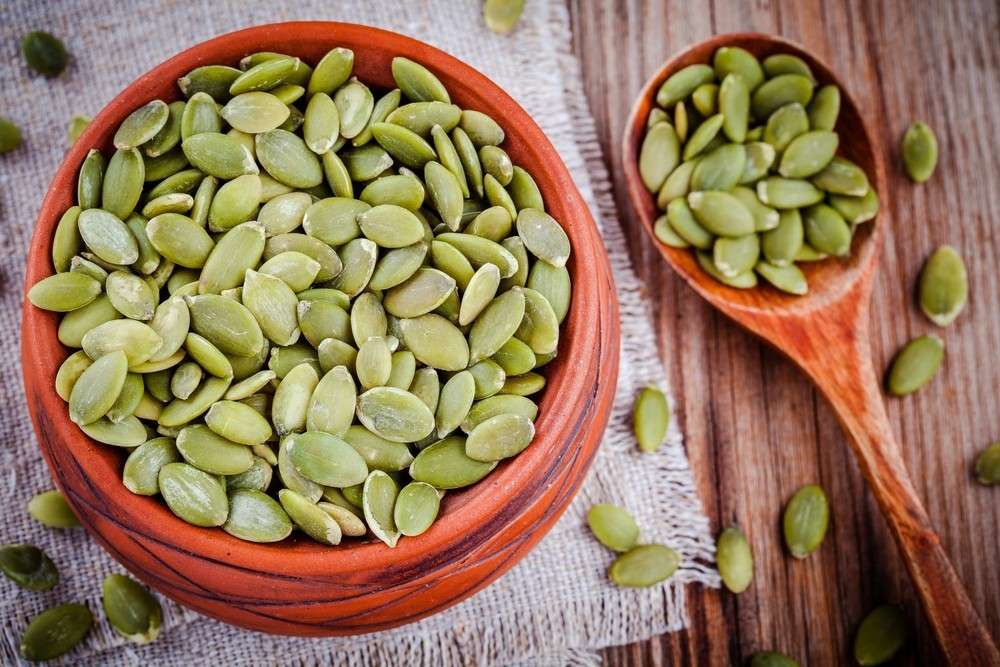
Kaddu ke beej (Cucurbita pepo seeds) are the edible kernels of the pumpkin plant, a member of the gourd family (Cucurbitaceae). In their shelled form — flat, oval, dark green — they are sold across Pakistan in pansari shops and dry fruit markets under the name magaz or kaddu ka magaz.
- Shelled kernels (magaz): The green inner seeds without the white outer hull — the most nutritionally dense and common form in Pakistani markets. Also known internationally as pepitas seeds.
- Unshelled seeds: Whole seeds with the white fibrous outer shell still intact. Less common in Pakistan, harder to digest, but edible.
- Oilseed pumpkin varieties: Certain pumpkin cultivars (Styrian, Lady Godiva) are grown specifically for their hull-less, high-oil kernels. These yield the pressed oil increasingly available in Pakistani health stores.
Kaddu ke Beej in Urdu — Local Names Across Pakistan
| English | Urdu Script | Pakistani Common Name | Context |
| Pumpkin seeds | کدو کے بیج | Kaddu ke beej | Nationwide — universally understood |
| Shelled kernels | مغز | Magaz / Kaddu ka magaz | Lahore, Karachi pansari shops |
| Pumpkin (vegetable) | کدو | Kaddu | Vegetable; seeds = kaddu ke seeds |
| Seed oil | کدو کے بیج کا تیل | Kaddu ke beej ka tel | Health stores, online platforms |
| International name | پیپیتاس | Pepitas seeds | Daraz, health food stores |
Nutrition Facts — What Is in 30g of Kaddu ke Beej?
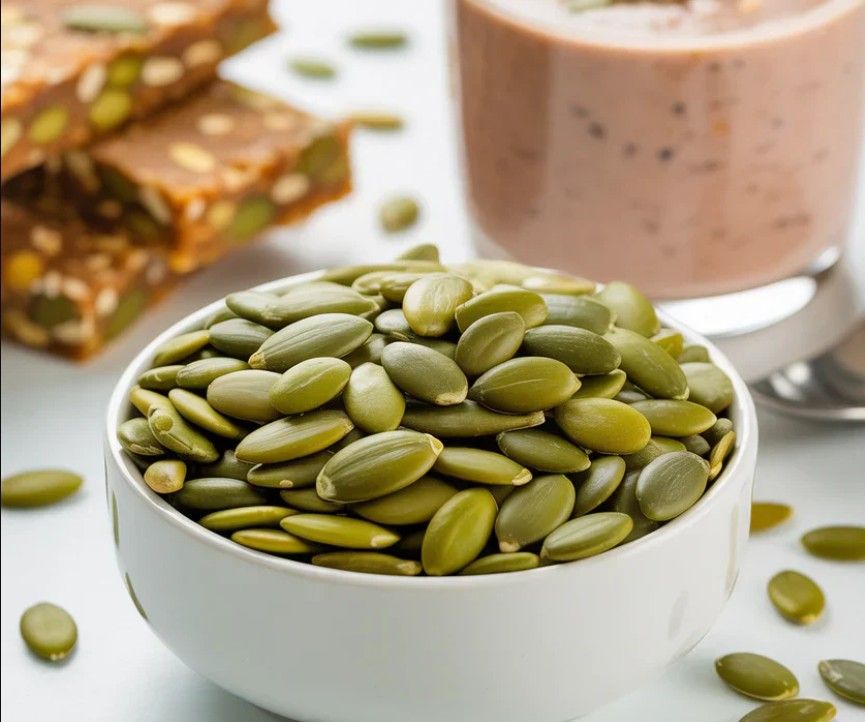
The reason these kernels deliver such wide-ranging health benefits lies in their exceptional nutrient density. Per 30g serving — roughly 3 to 4 tablespoons of shelled magaz:
| Nutrient | Per 30g | % Daily Value | Why It Matters |
| Calories | 180 kcal | — | Dense energy — no blood sugar spike |
| Protein | 9g | 18% | Complete amino acids — hair keratin, muscle repair |
| Total Fat | 15g | 19% | Mostly unsaturated — heart-healthy omega-6 |
| Carbohydrates | 3g | 1% | Very low — keto-friendly |
| Fibre | 1.1g | 4% | Gut health, satiety |
| Magnesium | 150mg | 37% | Sleep, anxiety, blood pressure, cortisol |
| Zinc | 2.1mg | 19% | Testosterone, immunity, hair follicle repair |
| Iron | 2.5mg | 14% | Fights anaemia — #1 cause of hair fall in women |
| Phosphorus | 330mg | 47% | Bone strength, ATP energy production |
| Manganese | 0.9mg | 42% | Antioxidant enzyme activation |
| Copper | 0.4mg | 44% | Collagen synthesis, iron absorption |
| Tryptophan | ~80mg | — | Converts to serotonin → melatonin (sleep) |
| Cucurbitin (unique) | Present | — | DHT inhibition — hair growth & prostate health |
| Phytosterols | ~55mg | — | Reduces LDL cholesterol absorption |
Key insight for Pakistan: Magnesium (37% DV) and zinc (19% DV) per serving make these the most practical food source of two chronically deficient minerals in the average Pakistani diet. Most adults consume less than 60% of their daily magnesium requirement.
10 Proven Kaddu ke Beej Benefits — Ranked by Evidence
Each benefit is rated on evidence strength (⭐ = limited, ⭐⭐⭐⭐⭐ = strong clinical trials). All are directly relevant to common health concerns in Pakistan.
Benefit 1: Promotes Hair Growth & Reduces Hair Fall ⭐⭐⭐⭐⭐
Among all kaddu ke beej benefits, the hair growth effect is the most clinically validated. The active compound cucurbitin — found almost exclusively in the kernels of this plant — inhibits 5-alpha reductase, the enzyme that converts testosterone into DHT (dihydrotestosterone). DHT is the primary hormonal driver of androgenetic alopecia, the most common form of permanent hair loss in both men and women.
A double-blind, placebo-controlled trial published in Evidence-Based Complementary and Alternative Medicine found men who supplemented daily with the extracted oil experienced a 40% increase in hair count over 24 weeks — versus just 10% in the placebo group. That is a four-fold difference from a food-derived supplement.
Hair fall in Pakistani women is often driven by iron deficiency anaemia. One 30g serving of these kernels provides 14% of the daily iron requirement. The zinc content additionally repairs damaged follicles and maintains the scalp’s sebaceous glands. Together, these three pathways make a 30–40g daily serving one of the most cost-effective dietary interventions for hair loss available in Pakistan.
How to use: Eat 30–40g of roasted magaz daily for at least 90 consecutive days. For accelerated results, pair with 400–1000mg of cold-pressed oil capsules — the form used in the clinical trial.
Benefit 2: Dramatically Improves Sleep Quality ⭐⭐⭐⭐
The sleep benefit is among the most underrated of all kaddu ke beej benefits — and for Pakistan’s increasingly sleep-deprived, high-stress urban population, it may be the most immediately impactful. These kernels are among the richest natural food sources of tryptophan, an essential amino acid the body converts sequentially into serotonin (mood regulation) and then melatonin (the sleep hormone).
The magnesium in a single serving delivers a second, independent sleep mechanism: it activates the parasympathetic (rest-and-digest) nervous system, suppresses cortisol, and has been shown in multiple randomised controlled trials to reduce sleep-onset time, increase total sleep duration, and decrease night-time waking.
How to use for sleep: Eat 1 tablespoon of magaz with a small carbohydrate — a date, a banana, or a small piece of roti — 1 to 2 hours before bedtime. The carbohydrate raises insulin slightly, which preferentially shuttles tryptophan across the blood-brain barrier. A warm glass of milk with these seeds stirred in amplifies the effect further.
Benefit 3: Supports Men’s Health — Prostate & Testosterone ⭐⭐⭐⭐⭐
Men’s health is among the most evidence-backed of all kaddu ke beej benefits. Two mechanisms dominate. First: cucurbitin reduces benign prostatic hyperplasia (BPH — enlarged prostate) by inhibiting DHT at the prostate tissue level. A European randomised controlled trial found the extracted oil was as effective as the pharmaceutical drug finasteride in reducing urinary urgency, frequency, and nocturia — with zero reported side effects.
Second: zinc is the most critical mineral for male hormonal health. It regulates testosterone synthesis, prevents excess conversion of testosterone to estrogen via aromatase, and is directly involved in sperm formation and motility. Pakistani men are frequently zinc-deficient due to wheat-heavy, phytate-rich diets that block zinc absorption — making a daily handful of magaz a particularly high-value dietary addition.
Benefit 4: Supports Weight Loss ⭐⭐⭐⭐
Three mechanisms make these seeds genuinely useful for weight management rather than merely ‘healthy.’ First, 9g of protein per 30g serving is among the highest protein-to-calorie ratios of any natural snack available in Pakistan — protein is the most satiating macronutrient per calorie and dramatically reduces between-meal hunger. Second, just 3g of carbohydrates per serving makes them fully compatible with keto and low-carb dietary approaches. Third, the magnesium content improves insulin sensitivity, reducing blood sugar instability that drives sugar cravings.
The critical point: use them as a replacement for unhealthy snacks — biscuits, chips, mithai between meals — not as an addition to existing intake. At 180 calories per 30g, they are calorie-dense. The satiety they produce, however, means you eat less overall.
Benefit 5: Benefits for Skin — Glow, Clarity & Even Tone ⭐⭐⭐⭐
The skin benefits of kaddu ke beej work from three nutritional angles simultaneously. Zinc accelerates skin cell renewal, reduces acne-driving sebum overproduction via the same 5-alpha reductase inhibition pathway responsible for the hair benefit, and directly reduces inflammatory skin conditions. Vitamin E protects cell membranes from UV-induced oxidative damage. Carotenoids convert to vitamin A in the body, which regulates skin cell turnover and maintains the moisture barrier.
The result is a food that supports clearer, more evenly toned skin from within — an approach that complements rather than replaces topical skincare. Skin whitening effects in traditional use are attributed to the copper content, which regulates melanin synthesis (though clinical human evidence for this specific effect remains limited).
Benefit 6: Supports Female Fertility ⭐⭐⭐
Zinc is critical for follicle development, ovulation, and early embryo implantation. Iron prevents iron-deficiency anaemia that disrupts the menstrual cycle. Magnesium regulates the hypothalamic-pituitary-ovarian axis — the hormonal control system governing the menstrual cycle and ovulation timing. Omega-6 fatty acids present in these kernels are precursors to prostaglandins involved in ovulation itself.
These nutrients collectively create a meaningful nutritional foundation for female fertility — not a standalone treatment, but a genuinely supportive dietary addition for women trying to conceive or maintain hormonal regularity.
Benefit 7: Safe & Nutritious During Pregnancy ⭐⭐⭐⭐
Kaddu ke beej are safe and beneficial throughout pregnancy in normal food amounts (30–40g daily). Folate supports neural tube formation in the first trimester. Iron prevents pregnancy anaemia — which affects more than 50% of pregnant women in Pakistan. Zinc supports fetal immune development and growth. Magnesium reduces muscle cramps, helps control blood pressure (lowering pre-eclampsia risk), and improves sleep quality during pregnancy.
Combining a tablespoon of magaz with a tablespoon of sunflower seeds as a daily snack is safe throughout all three trimesters and provides an excellent complementary nutrient profile — sunflower seeds add folate and vitamin E while these kernels contribute zinc and magnesium.
Note: Normal food amounts of the raw or roasted seeds are safe during pregnancy. High-dose oil supplements (capsules above 400mg) should be discussed with your doctor before use.
Benefit 8: Reduces Anxiety & Supports Brain Health ⭐⭐⭐
Magnesium deficiency is directly associated with heightened anxiety sensitivity, poor stress response, and depression in multiple systematic reviews. A 30g serving of these kernels provides 37% of the daily magnesium requirement — making them one of the most magnesium-dense foods you can add to a Pakistani diet. The tryptophan-to-serotonin pathway adds a secondary mood-elevating effect.
Brain health specifically benefits from magnesium’s role in synaptic plasticity (memory and learning) and zinc’s involvement in neurotransmitter function across the dopamine, GABA, and glutamate systems. Pakistan’s urban population faces chronically elevated stress and anxiety levels — a food-based intervention at Rs. 500–800 per 250g is both accessible and genuinely meaningful.
Benefit 9: Protects Heart Health ⭐⭐⭐⭐
Three compounds in kaddu ke beej provide independent cardiovascular protection. Phytosterols compete with dietary cholesterol for absorption in the gut, effectively reducing LDL (bad cholesterol) without medication. Magnesium relaxes blood vessel walls and has been associated in epidemiological studies with a 22% lower risk of ischaemic heart disease in people with adequate intake. Unsaturated fatty acids reduce systemic inflammation linked to atherosclerotic plaque formation.
Given that cardiovascular disease is Pakistan’s leading cause of death, and given that both magnesium and healthy fat intake are consistently low in the average Pakistani diet, adding 30g of magaz daily represents a cost-effective, culturally accessible cardiac intervention.
Benefit 10: Regulates Blood Sugar & Supports Diabetes Management ⭐⭐⭐
Pakistan has one of the highest diabetes rates globally. These seeds help manage blood sugar via three pathways: negligible carbohydrate content (3g per 30g — glycaemic index near zero) means they do not spike blood glucose; their protein slows gastric emptying and glucose absorption from food eaten in the same meal; and magnesium improves cellular insulin sensitivity.
Animal studies additionally suggest compounds in these kernels may enhance beta-cell function (insulin production) and reduce oxidative stress in pancreatic tissue — though human clinical trials are still ongoing. As a snack replacement for high-glycaemic alternatives common in Pakistan (biscuits, bread, chips), they offer a meaningful blood sugar management tool.
Raw vs Roasted — Which Form Is Better?
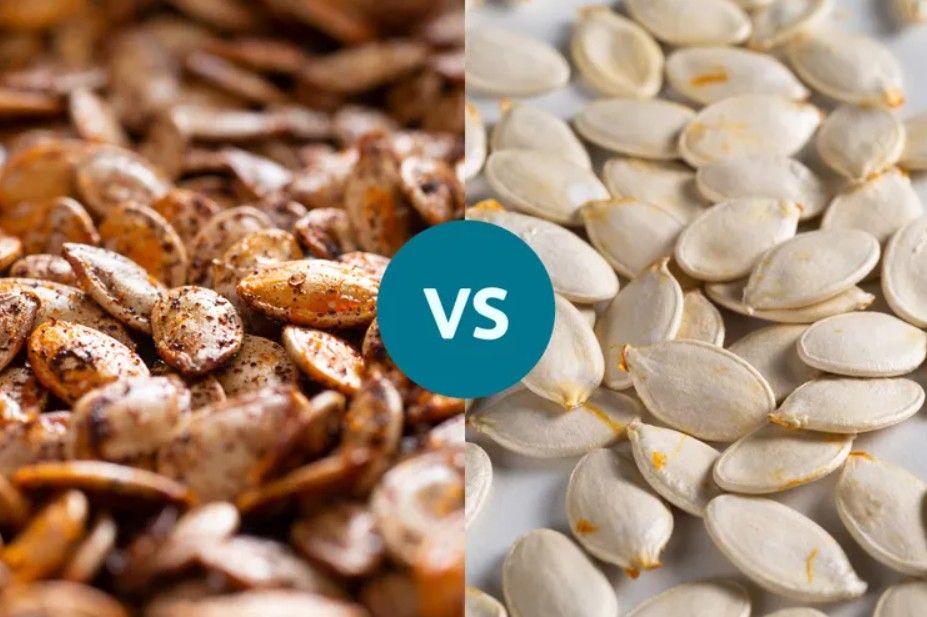
This is the most practical question most people ask after learning about these seeds. The short answer: both work well, but for slightly different priorities.
| Factor | Raw Kaddu ke Beej | Roasted Kaddu ke Beej | Best Choice |
| Nutrient retention | Maximum (no heat damage) | Slightly lower vitamin E/zinc | Raw — marginal advantage |
| Phytic acid | Higher → blocks minerals | Lower → better absorption | Roasted wins |
| Digestibility | Harder — enzyme inhibitors | Easier — heat deactivates inhibitors | Roasted wins |
| Taste | Mild, chewy, earthy | Nutty, crunchy, more flavourful | Personal preference |
| Pathogen safety | Low risk if freshly stored | Safer — heat eliminates pathogens | Roasted wins |
| Keto suitability | 3g carbs per 30g | 3g carbs per 30g | Equal |
| Pakistan availability | Pansari shops — ask for raw magaz | Widely available pre-roasted | Roasted more convenient |
Best practice recommendation: Lightly roasted, unsalted magaz eaten daily is the optimal convenience choice. For maximum mineral absorption, soak raw seeds in water for 8 hours, drain, and eat — this removes phytic acid and deactivates enzyme inhibitors without heat.
How to Eat Kaddu ke Beej — 8 Pakistan-Friendly Ways
- Plain roasted snack: 2–3 tablespoons mid-morning or afternoon. Store in a small jar on your desk. The protein keeps hunger away until the next meal.
- Mixed into dahi: Stir into plain yoghurt with a small drizzle of honey. A protein-packed breakfast or post-workout snack.
- Sprinkled over daal or sabzi: Toast lightly and scatter over cooked daal, saag, or any vegetable dish just before serving. Adds crunch and nutrition without altering the dish flavour.
- Soaked overnight: Soak 2 tablespoons in room-temperature water for 8 hours. Drain, add a pinch of sea salt, and eat. This is the optimal preparation for digestive comfort and mineral bioavailability.
- Added to chaat or raita: Scatter over dahi chaat, fruit chaat, or any raita for a nutritional upgrade with texture.
- Blended into a smoothie: One tablespoon is completely flavourless when blended — effortlessly adds 3g protein and zinc to any morning drink.
- With warm milk at night: Stir one tablespoon into warm milk with a small amount of honey, 1–2 hours before sleep. A powerful, food-based sleep formula.
- Ground into a paste: Blend roasted kernels in a food processor until smooth — a nutritious seed butter that spreads like peanut butter with a superior nutrient profile.
Daily Dosage Guide — How Many to Eat Per Goal
| Health Goal | Daily Amount | Best Form | Timing |
| General health | 30g (3–4 tbsp) | Roasted magaz | Any time with meals |
| Hair growth | 30–40g + oil capsule | Seeds + 400mg oil capsule | Morning, 90+ consecutive days |
| Better sleep | 1 tbsp (15g) | Raw or lightly roasted | 1–2 hrs before bed with a date |
| Weight loss | 30g replacing a snack | Roasted, unsalted | Between meals to reduce hunger |
| Pregnancy support | 30g | Roasted, plain | Any time — no high-dose oil supplements |
| Men’s health / prostate | 30g + 800mg oil | Seeds + supplement | Morning with breakfast |
| Diabetes management | 30g | Unsalted, roasted | Before or with a meal — blunts glucose spike |
| Anxiety / mood | 30g | Any form | Evening meal or before bed |
| Maximum safe amount | 50g | Any | Do not exceed — causes digestive discomfort |
Kaddu ke Beej Price in Pakistan — 2026 Market Guide
‘Pumpkin seeds price’ and ‘pumpkin seeds price 1kg’ together have 1,000+ monthly searches in Pakistan. Here are realistic current market prices:
| Product | Weight | Price (PKR) | Source |
| Shelled magaz (local) | 100g | Rs. 120–200 | Pansari shop, dry fruit market |
| Shelled magaz (local) | 250g | Rs. 280–450 | Pansari, Imtiaz Superstore |
| Shelled magaz (local) | 500g | Rs. 500–850 | Metro, Carrefour, Daraz |
| Shelled magaz (local) | 1kg | Rs. 900–1,600 | Wholesale market, Daraz bulk |
| Organic / imported | 200g | Rs. 700–1,200 | Health food stores, Daraz |
| Raw / unroasted | 250g | Rs. 350–600 | Pansari, health stores |
| Oil capsules (400mg) | 60 capsules | Rs. 1,200–2,500 | Health stores, Daraz |
Buying tip: Fresh shelled magaz should be firm, uniformly dark green, and smell nutty — not rancid or musty. Old stock loses beneficial oils fast. Avoid suspiciously cheap options below Rs. 700/kg for shelled seeds. On Daraz, filter for sellers with recent restocking dates and strong review history.
Where to Buy in Pakistan
- Pansari shops: Ask for ‘kaddu ke beej’ or ‘kaddu ka magaz.’ Liberty Market Lahore, Empress Market Karachi, F-10 Islamabad — all have reliable dry fruit vendors. Best price and freshness.
- Daraz: Search ‘kaddu ke beej’, ‘pepitas seeds’, or ‘pumpkin seeds 500g’. Filter by recently stocked and 4+ star rated sellers. Price range: Rs. 400–1,500 per 500g.
- Metro / Imtiaz / Carrefour / CSD: Available in the dry fruit and health food aisle. Consistent quality, 10–20% more expensive than pansari shops.
- Health food stores: For organic options or cold-pressed oil capsules — available in DHA Lahore/Karachi, F-7/F-10 Islamabad.
- Herblo Naturals: Premium quality magaz sourced for freshness, not extended shelf life. Nationwide delivery available.
Side Effects & Precautions — Who Should Be Careful?
These seeds are safe for the vast majority of people. The following precautions apply:
- Caloric density: 180 calories per 30g. If managing weight, measure servings — do not eat directly from the bag.
- Digestive discomfort: Eating more than 50g at once can cause bloating or loose stools. Start with 1 tablespoon and increase over 1–2 weeks.
- Phytic acid (raw seeds): Reduces absorption of zinc and iron. Eliminated by roasting or overnight soaking.
- Seed allergy (rare): Possible if you have known seed or tree nut allergies. Introduce cautiously.
- Blood pressure medications: The extracted oil has mild antihypertensive effects. Discuss high-dose oil supplements with your doctor if taking antihypertensives.
- Pregnancy (supplements only): Food-amount consumption is safe and beneficial. High-dose oil supplements need medical clearance.
Frequently Asked Questions
Optimised for Google’s People Also Ask and Featured Snippets:
Q: What are kaddu ke beej benefits in Urdu?
Kaddu ke beej (کدو کے بیج) کے 10 اہم فائدے: بالوں کی افزائش، نیند میں بہتری، مردوں کی صحت، وزن میں کمی، جلد کی چمک، زرخیزی، حمل میں فائدہ، بے چینی میں کمی، دل کی صحت، اور شوگر کنٹرول۔ روزانہ 30 گرام (3–4 چمچ) کھانے سے ان فوائد کا بھرپور فائدہ اٹھایا جا سکتا ہے۔
Q: What is kaddu ke beej called in English?
Kaddu ke beej is the Urdu name for pumpkin seeds — the edible kernels of the Cucurbita pepo plant. The shelled green kernels are also internationally known as pepitas. In Pakistani dry fruit markets, they are often sold as magaz or kaddu ka magaz.
Q: How many seeds should I eat per day?
30 grams (3–4 tablespoons) per day is the recommended amount for most adults. This provides 37% of daily magnesium, 19% of daily zinc, 14% of daily iron, and 9g of complete protein — all in approximately 180 calories. Do not exceed 50g per day as larger amounts can cause digestive discomfort.
Q: Can kaddu ke beej stop hair fall?
Yes — there is strong clinical evidence supporting this. The unique compound cucurbitin in these kernels inhibits 5-alpha reductase, reducing scalp DHT — the hormone responsible for follicle miniaturisation and hair loss. A clinical trial showed a 40% hair count increase after 24 weeks. Eat 30–40g daily for at least 3 months for measurable results.
Q: Are these seeds safe during pregnancy?
Yes — in normal food amounts (30–40g daily), they are safe and beneficial throughout pregnancy. They provide iron (prevents anaemia), zinc (fetal development), magnesium (reduces cramps), and folate (neural tube protection). Avoid high-dose oil supplement capsules without medical advice.
Q: Can I eat these at night for sleep?
Yes — eating them before bed is specifically beneficial. Tryptophan converts to melatonin (the sleep hormone). Eat 1 tablespoon with a small carbohydrate — a date or piece of roti — 1 to 2 hours before sleep. Stirring them into warm milk amplifies the effect.
Q: What is the price of kaddu ke beej per kg in Pakistan?
As of 2026, shelled magaz (local quality) costs approximately Rs. 900–1,600 per kg from pansari shops and dry fruit markets. Organic or imported varieties cost Rs. 1,500–2,500 per kg. Daraz lists various brands at Rs. 400–1,500 per 500g depending on quality and certification.
Q: Are they halal?
Yes — these are 100% halal. They are a natural plant food with no animal-derived components or processing concerns, fully permissible under Islamic dietary guidelines.
Q: Raw or roasted — which is better?
Roasted magaz has lower phytic acid (better mineral absorption) and better digestibility — making them the practical daily choice. Raw seeds retain marginally more heat-sensitive vitamins. For maximum benefit: soak raw seeds overnight, drain, and eat — this removes phytic acid without heat. For daily convenience: lightly roasted, unsalted kernels are ideal.
Q: Where can I find them in Pakistan?
Pansari shops and dry fruit markets are the most affordable and freshest source — ask for ‘kaddu ke beej’ or ‘magaz.’ Daraz stocks multiple brands online with nationwide delivery. Metro, Imtiaz, and Carrefour carry them in the dry fruit aisle. Herblo Naturals offers premium quality seeds with doorstep delivery across Pakistan.
Conclusion — 10 Benefits Worth Rs. 500
Kaddu ke beej have been in Pakistan’s pansari shops for generations — used in Ayurvedic and Unani medicine long before clinical research confirmed what traditional healers already knew. What modern science adds is precision: cucurbitin for hair and prostate, tryptophan and magnesium for sleep, zinc for testosterone and immunity, iron for women’s energy and hair, complete protein for muscle and skin.
For Rs. 500–800 per 250g, these kernels address ten of the most prevalent health challenges facing Pakistan today. No supplement matches this breadth of evidence at this cost. The dosage is simple: 3–4 tablespoons of roasted magaz daily, replacing your current snack, for 90 consecutive days. Track the difference.
At Herblo Naturals, we stock premium, fresh-sourced kaddu ke beej — packed for potency, not shelf life. Because Pakistan’s best medicine has always grown in nature.

Dr. KJ Minhas, M.Phil, DHMS (Diploma in Homeopathic Medicine and Surgery), registered practitioner with the National Council for Homeopathy (NCH) — reviews content for accuracy and safety.