
Mathidana, or methi dana for hair growth is one of the oldest home remedies passed down in Pakistani households — long before “hair fall shampoo” was a category on Daraz, grandmothers were soaking methi dana overnight and rubbing the water into their scalps. The remedy has survived for a reason, but it’s worth separating what fenugreek actually does from what’s simply been repeated for generations. This guide covers the nutrition behind the claim, the methods people actually use, what the evidence supports, and how to use it safely.
What Is Methidana/Mathidana and Why It’s Used for Hair in Pakistan
Fenugreek, known as Mathidana or methi dana in Urdu and Punjabi and written میتھی in Urdu script, is a small amber seed from the Trigonella foenum-graecum plant. It’s a kitchen staple across Pakistan — used whole in tempering (tarka), ground into spice blends, and dried as kasoori methi for curries. Its use for hair comes from Unani and home-remedy traditions rather than the kitchen, where the seeds are soaked, ground into a paste, or brewed as a rinse rather than eaten.
Fenugreek seeds are widely available at any pansari shop for a fraction of the price of packaged hair-growth products, which is part of why the remedy has stayed popular even as branded alternatives have flooded the market.
The Nutrients in Mathidana or Methi dana That Are Relevant to Hair Health
Fenugreek seeds contain a combination of compounds that plausibly support scalp and hair health, even though most of the research is preliminary:
- Protein and lecithin — hair strands are largely protein (keratin), and lecithin is thought to help condition and strengthen the shaft
- Iron and potassium — both are commonly linked to healthy hair follicles when dietary levels are adequate
- Nicotinic acid (a form of niacin) — traditionally associated with scalp circulation
- Mucilage — the sticky gel released when seeds are soaked, which is why fenugreek water and paste both have a slippery, conditioning texture
None of this means Mathidana or methidana is a proven cure for hair loss. It means the seed has a nutrient profile that lines up with several things hair is known to need — which is a reasonable basis for a traditional remedy, but not the same as clinical proof.
How to Use Fenugreek for Hair Growth
There are four common ways Mathidana or methi dana is used for hair in Pakistani households. All of them start with soaking the seeds, which softens them and releases the mucilage.
1. Mathidana or methidana Water Rinse
Soak 2 tablespoons of fenugreek seeds in a cup of water overnight. In the morning, strain the water and use it as a final rinse after shampooing, or apply it directly to the scalp and leave it for 20–30 minutes before washing out.
2. Fenugreek Seed Paste (Hair Mask)
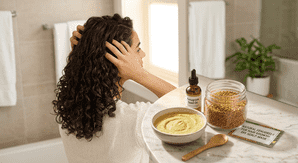
Grind the overnight-soaked Mathidana or methidana seeds into a smooth paste. Many households mix this with plain yogurt or a spoon of coconut oil to make it easier to apply. Spread through the scalp and hair, leave for 30–45 minutes, then rinse with a mild shampoo.
3. Mathidana or methidana-Infused Oil
Warm a neutral oil (coconut or mustard oil are the common choices) with a tablespoon of whole fenugreek seeds on low heat for 5–10 minutes, let it cool, strain out the seeds, and massage the oil into the scalp. This is typically left in for a few hours or overnight.
4. Soaked Seeds, Taken Internally
Some people also eat the overnight-soaked seeds directly, on the theory that internal nutrition supports hair from the inside. If you choose this route, start with a small amount (around a teaspoon of seeds) rather than a heaping spoonful — fenugreek is potent and can affect blood sugar and digestion at higher amounts.
What the Research Actually Says
Scientific study on Mathidana or methi dana specifically for hair growth is limited. Most of what’s published looks at fenugreek’s effects on blood sugar, cholesterol, and testosterone-related markers, not hair follicles directly. The compound diosgenin, found in fenugreek, has drawn research interest for its hormone-related activity, and some of the interest in fenugreek for hair growth is an extrapolation from that — not a direct finding.
This isn’t a reason to dismiss the remedy, but it is a reason to keep expectations realistic. Fenugreek is best understood as a low-cost, low-risk traditional scalp treatment with a plausible nutritional rationale — not a clinically validated hair-loss treatment. If hair fall is sudden, patchy, or accompanied by other symptoms, that’s a conversation for a doctor, not a home remedy.
Fenugreek Seeds in Urdu (میتھی دانہ) — Buying and Pricing in Pakistan
Fenugreek seeds are sold as methi dana (میتھی دانہ) in every pansari shop and general store in Pakistan, and are also available packaged through Daraz, Metro, and Imtiaz. Loose seeds from a pansari are typically the most economical option for making pastes and oils at home, while packaged and pre-cleaned seeds from larger retailers cost more but save on sorting. Prices vary by season and city, so it’s worth comparing your local pansari against online listings before buying in bulk.
Safety and Who Should Be Cautious
Fenugreek is generally safe when used topically or eaten in normal culinary amounts, but a few groups should be careful:
- Pregnant women — fenugreek has traditionally been avoided in pregnancy due to its potential to stimulate uterine contractions
- People with diabetes or on blood-sugar-lowering medication — fenugreek can lower blood sugar, so combining it with medication needs medical supervision
- People with legume allergies — Mathidana or methidana is part of the legume family and can cross-react in those allergic to peanuts or chickpeas
- Anyone with a strong maple-like body odor after use — this is a known, harmless side effect of fenugreek but can surprise first-time users
As with any new topical or dietary remedy, patch-test on a small area of skin first and stop use if you notice irritation.
Fenugreek for Hair Growth FAQs
Does methi dana actually regrow hair?
There’s no strong clinical evidence that fenugreek regrows hair on its own. It’s more accurately described as a scalp-conditioning and nourishing remedy that may support the health of existing hair, rather than a treatment for baldness or significant hair loss.
How long does it take to see results from fenugreek for hair?
Traditional use suggests consistent application over 8–12 weeks, several times a week, before noticing a difference in scalp condition or hair fall. Hair growth cycles are slow, so shorter trials rarely show much.
Is fenugreek water or fenugreek paste better for hair fall?
Both are used for different reasons — the water rinse is lighter and easier to use regularly, while the paste delivers a more concentrated application. Many people alternate between the two rather than picking one exclusively.
Can I leave Mathidana or methi dana paste on my hair overnight?
It’s generally better to limit fenugreek paste to 30–45 minutes. Leaving a wet paste on the scalp overnight increases the chance of odor and irritation without added benefit.
Is fenugreek safe to use with other hair oils like rosemary or ashwagandha?
Yes, fenugreek is commonly combined with other traditional ingredients like rosemary water or ashwagandha oil. Introduce one new ingredient at a time so you can identify what’s working or causing irritation.
Check our Shop for Methi dana

Dr. KJ Minhas, M.Phil, DHMS (Diploma in Homeopathic Medicine and Surgery), registered practitioner with the National Council for Homeopathy (NCH) — reviews content for accuracy and safety.