
Moringa is Pakistan’s most powerful superfood — and most people walk past it every day without recognising it. Known as Suhanjna (سوہانجنا) in Punjabi and Urdu, or Sahjan in common speech, this slender tree with small oval leaves and long hanging pods has grown across Pakistan’s plains, courtyards, and village roadsides for centuries.
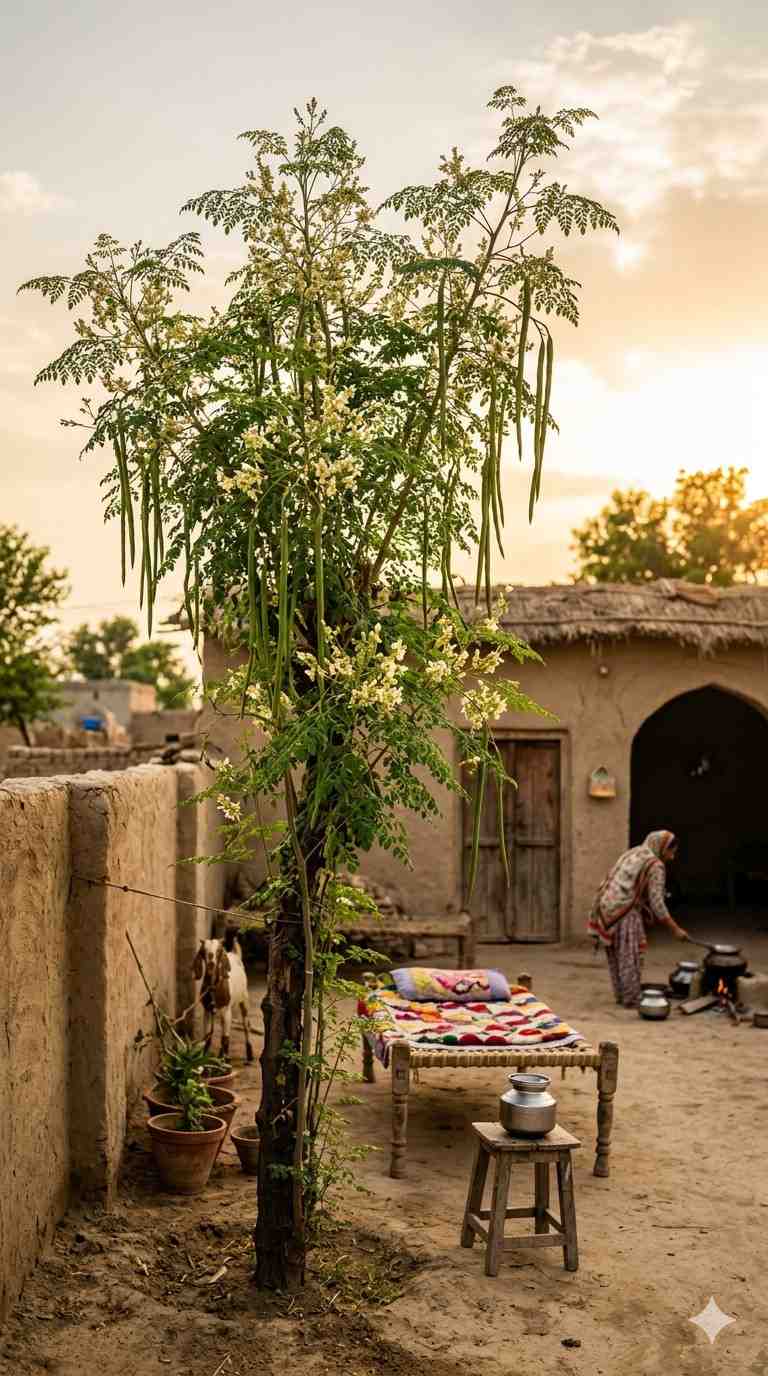
Modern nutritional science has now confirmed what traditional healers always knew: Moringa oleifera is one of the most nutrient-dense plants ever studied. It contains more iron than spinach, more calcium than milk, more Vitamin C than oranges, and all nine essential amino acids. The World Health Organisation uses this plant to treat malnutrition. It is no accident that it is called the miracle tree.
This guide covers everything: what this superfood is, its complete nutritional profile, every major science-backed health benefit, the three forms (leaves, powder, and capsules), how to use it safely, and what to look for when buying in Pakistan.
What Is Moringa? The Tree Growing Across Pakistan
Moringa oleifera belongs to the family Moringaceae and is native to the sub-Himalayan foothills stretching across northern India, Pakistan, Bangladesh, and Afghanistan. It is a fast-growing, drought-tolerant deciduous tree that can reach 10–12 metres tall, though it is usually kept shorter for easier leaf harvesting.
What makes Moringa extraordinary — and the reason it is grown across more than 90 countries — is that almost every part is useful. The leaves, young pods (drumsticks), seeds, flowers, roots, and even the bark all have documented nutritional, medicinal, or practical uses.
Moringa’s local Names Across Pakistan’s Languages
If you search for superfood Moringa in Pakistan, you may find it listed under several local names depending on the region:
| Language | Local Name | Script |
|---|---|---|
| Punjabi / Urdu | Suhanjna | سوہانجنا |
| Hindi-Urdu (Common) | Sahjan / Saijan | سہجن |
| Sindhi | Sargavo | — |
| Pashto | Swanjana | — |
| English | Drumstick Tree / Horseradish Tree | — |
| Scientific (Latin) | Moringa oleifera Lam. | — |
The long edible seed pods are called “drumsticks” in English — a term familiar from Pakistani and South Asian cooking, where drumstick dal is a traditional dish. The name moringa in Urdu (مورنگا / سوہانجنا) is increasingly used in urban Pakistan as the English name has become widely recognised.
Moringa’s Nutritional Profile: The Science Behind the Miracle
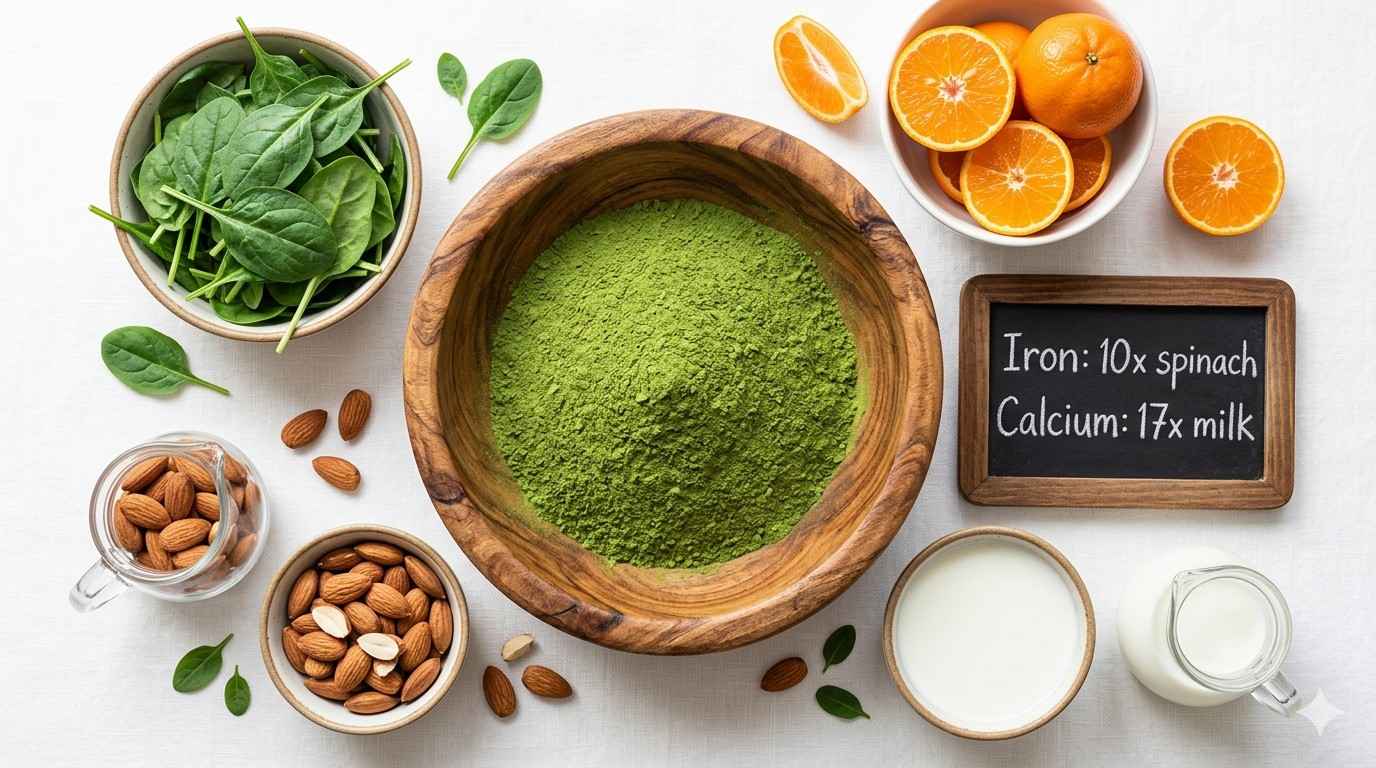
The most compelling way to understand Moringa’s nutritional power is through direct comparison. The table below uses dried leaf powder — the most concentrated form — measured against equal weights of commonly consumed foods.
| Nutrient | Moringa Powder (100g) | Comparison Food | Advantage |
|---|---|---|---|
| Vitamin C | ~220 mg | Orange (100g): ~53 mg | ~4× more |
| Calcium | ~2,000 mg | Whole Milk (100g): ~113 mg | ~17× more |
| Iron | ~28 mg | Spinach (100g): ~2.7 mg | ~10× more |
| Vitamin A (β-carotene) | ~6,780 µg RE | Carrot (100g): ~835 µg RE | ~8× more |
| Potassium | ~1,300 mg | Banana (100g): ~358 mg | ~3× more |
| Protein | ~27 g | Egg (100g): ~13 g | ~2× more |
| Magnesium | ~368 mg | Almonds (100g): ~270 mg | ~1.4× more |
Note: Values are approximate and vary by soil, climate, drying method, and analysis laboratory. Fresh leaves have lower concentrations due to water content.
Key Bioactive Compounds
Beyond vitamins and minerals, Moringa contains a unique range of compounds that drive many health benefits:
- Isothiocyanates — particularly moringin, with documented anti-inflammatory properties
- Quercetin — a flavonoid linked to antioxidant activity and blood pressure regulation
- Chlorogenic acid — a polyphenol studied for blood sugar management
- Kaempferol — an antioxidant flavonoid associated with reduced chronic disease risk
- Zeatin — a plant cytokinin with potential anti-ageing properties
- All 9 essential amino acids — making it one of the very few plant foods with a complete protein profile
This combination of macronutrients, micronutrients, and bioactive phytochemicals is what sets this superfood apart from other leafy greens and most plant-based supplements.
10 Health Benefits of Moringa Backed by Science
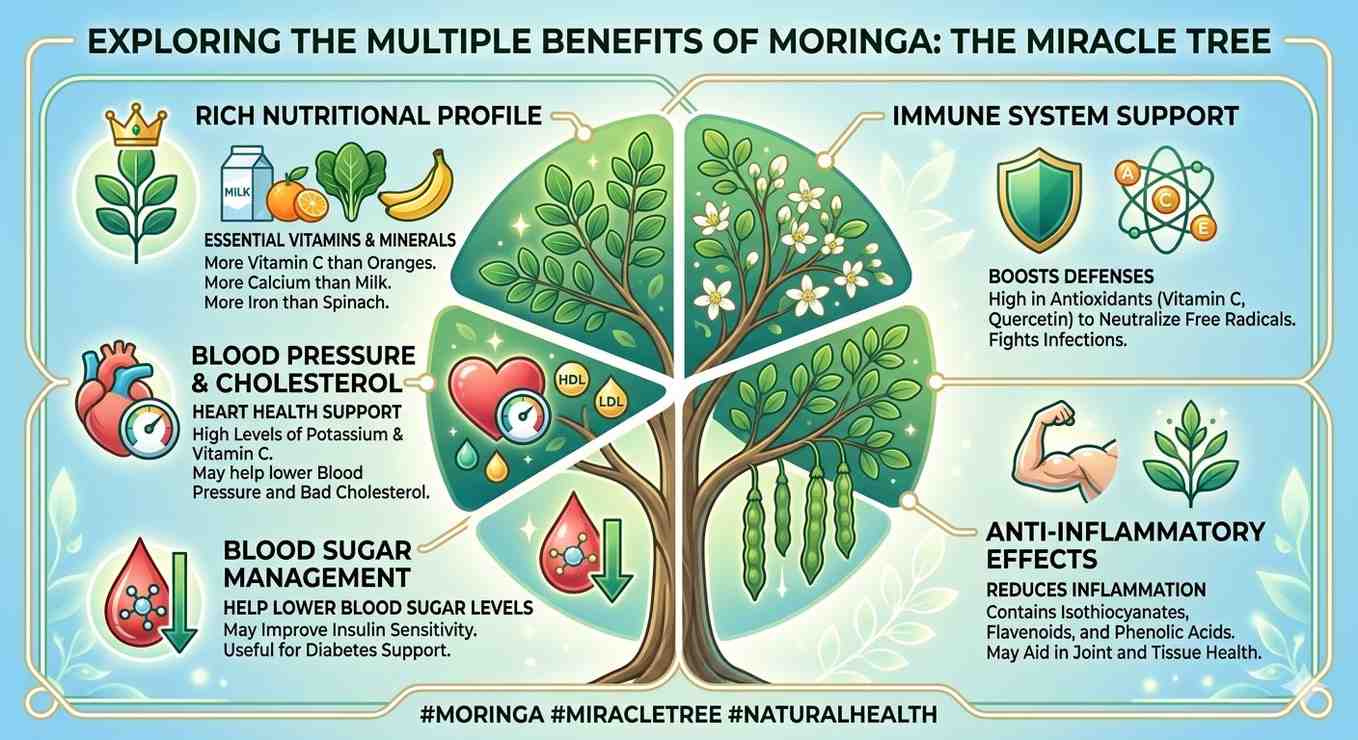
The research base on this plant has grown considerably over the past two decades. Below are the benefits with the strongest evidence. It is important to be clear: most human studies are still relatively small, and more large-scale clinical trials are underway. This is a food supplement — not a medicine.
1. Rich in Antioxidants That Fight Oxidative Stress
The leaves and powder of Moringa have consistently shown very high antioxidant activity in laboratory studies. A 2014 study published in the Journal of Food Science and Technology found that leaf powder supplementation in postmenopausal women significantly increased blood antioxidant markers and reduced oxidative stress.
2. Moringa supports Healthy Blood Sugar Levels
This is the most extensively researched benefit — and one of the most relevant for Pakistan, where type 2 diabetes rates are among the highest globally. Chlorogenic acid and isothiocyanates have been found to improve insulin sensitivity and slow glucose absorption.
Important: This is not a substitute for prescribed diabetes medication. Always consult your doctor before combining with diabetes treatment.
3. Moringa lowers Cholesterol and Supports Heart Health
Several animal studies and a notable 2012 human study in the Journal of Ethnopharmacology demonstrated significant cholesterol-lowering effects from supplementation. The beta-sitosterol in the seeds is thought to reduce LDL (bad) cholesterol levels.
4. Moringa helps Reduce High Blood Pressure
Quercetin — one of the major flavonoids — has been identified in multiple studies as a natural ACE inhibitor, which means it helps relax blood vessels and reduce blood pressure. The plant also contains niaziminin, a compound studied for its role in preventing arterial thickening.
5. Fights Iron Deficiency and Anaemia
Iron deficiency anaemia is highly prevalent in Pakistan, especially among women and children. The iron content — among the highest of any plant food — combined with Vitamin C (which enhances iron absorption by up to 67%) creates a naturally synergistic effect. Multiple studies in South Asia have shown supplementation raises haemoglobin and ferritin levels significantly.
6. Moringa supports Breast Milk Production
This is one of the most well-researched natural galactagogues (substances that support breast milk production). A randomised controlled trial found supplementation significantly increased breast milk output in nursing mothers compared to placebo.
7. Moringa anti-inflammatory Effects on Joints and Muscles
Moringin — the primary isothiocyanate — has demonstrated anti-inflammatory activity comparable to some pharmaceutical anti-inflammatories in cell studies. Early human research shows promise for joint pain, arthritis, and inflammatory conditions.
8. Moringa supports Hair Growth and Reduces Hair Fall
Moringa provides several nutrients directly linked to hair health: zinc supports follicle function; iron prevents nutritional hair loss; Vitamin A supports scalp cell turnover; and the complete amino acid profile provides keratin building blocks. Many people with iron-deficiency hair loss report visible improvement within 6–8 weeks of consistent use.
9. Boosts Energy and Reduces Fatigue
The high iron and B-vitamin content directly address nutritional fatigue — one of the most common health complaints among Pakistani adults, particularly women. Most users report increased energy within 2–4 weeks of consistent use.
10. Strengthens the Immune System
The very high Vitamin C (critical for white blood cell production), Vitamin A (essential for mucosal immunity), zinc (required for immune cell development), and anti-inflammatory phytochemicals collectively support immune resilience.
Three Forms: Leaves, Powder, and Capsules
This superfood is available in three main forms, each with distinct advantages. The right choice depends on how you want to use it, your lifestyle, and your health goal.
Fresh and Dried Leaves
Best for: cooking, traditional use, maximum Vitamin C, whole-food nutrition
Fresh leaves are the most traditional form and retain water-soluble vitamins — particularly Vitamin C — better than any dried product. In Pakistan, fresh leaves are used in dal, sabzi, and raita, and the young drumstick pods are eaten as a vegetable. Dried leaves can be crumbled into food or brewed as a tea.
Organic Powder
Best for: versatility, smoothies, cooking, skin and hair masks, higher potency per serving
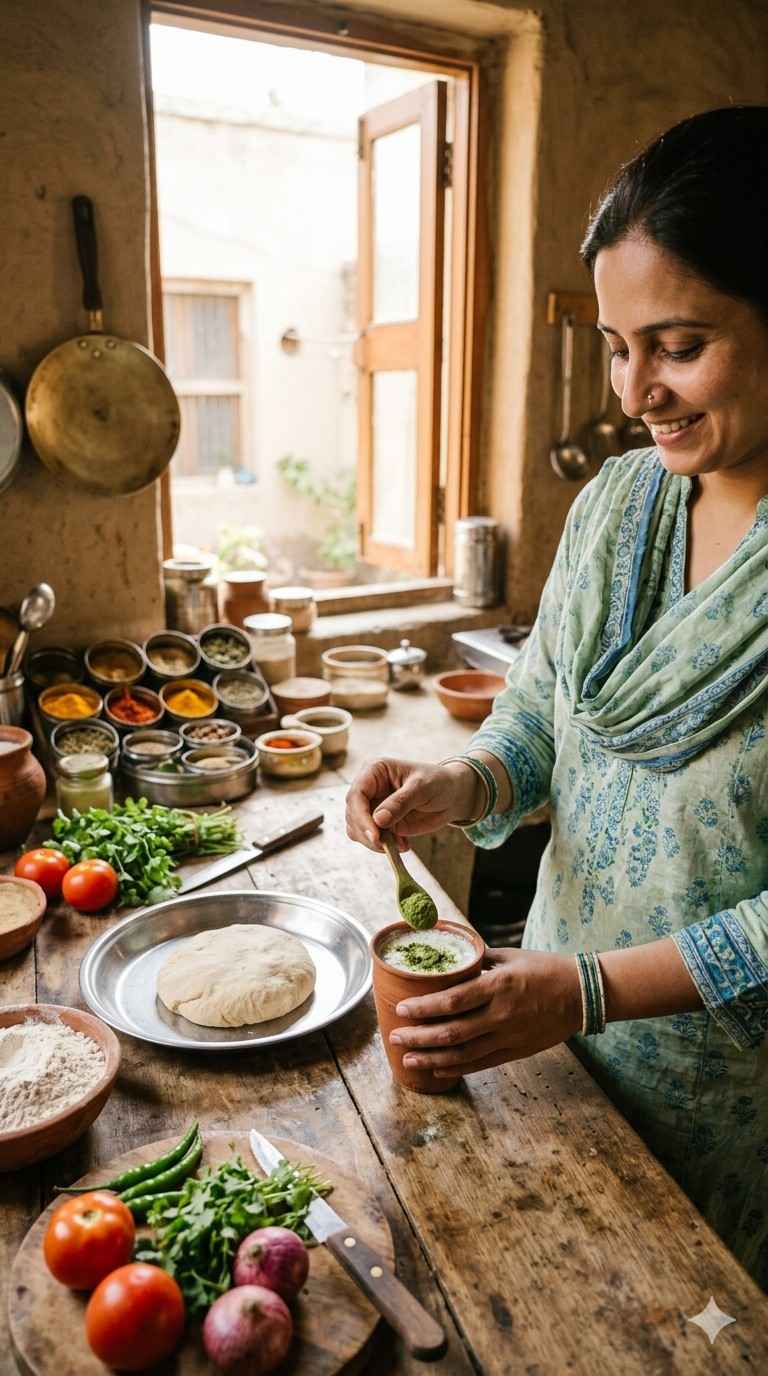
Powder is made by finely grinding dried leaves. It is the most versatile form — stir into water, blend into smoothies, add to dal, mix into yogurt, or apply as a face or hair mask. A quality organic powder should be bright green, smell earthy-grassy, and contain no fillers or anti-caking agents. Cold-dried powder preserves more nutrients than heat-processed alternatives.
Organic Capsules
Best for: convenience, travel, consistent dosing, those who dislike the taste
Capsules contain the same powder in a convenient, tasteless form — ideal for people who want the benefits without the flavour, or who need a precise measurable dose. Quality capsules clearly state the content per capsule (typically 400–600mg) and contain nothing else — no fillers, binders, or anti-caking agents.
How to Use Moringa: Dosage, Timing, and Practical Methods
There is no single universally agreed clinical dose, as large-scale trials are still ongoing. The following guidance is based on amounts used in published studies and traditional use across South Asia.
Recommended Daily Dosage
| Form | Typical Daily Range | Starting Dose | Notes |
|---|---|---|---|
| Fresh leaves | 20–30g (one handful) | 10–15g | Can be eaten raw or cooked |
| Dried leaf powder | 2–5g (1–2 teaspoons) | 1 tsp (2g) | Start small, increase over 1–2 weeks |
| Capsules (500mg) | 1–3 capsules/day | 1 capsule/day | Take with or after food |
Best Ways to Use Powder in Pakistani Food
- Stir ½–1 teaspoon into warm water with lemon and honey (morning drink)
- Blend into a mango or banana smoothie — the fruit masks the earthy taste
- Add to dal after removing from heat to preserve nutrients
- Mix into plain yogurt or lassi — the tartness balances the flavour well
- Use as a face mask mixed with honey and a few drops of rosewater
- Mix into chapati dough for a nutrient boost
Safety and Side Effects of Moringa : Who Should Be Careful
The leaves are widely considered safe for most adults when consumed at food amounts. The following cautions are important:
Who Should Use with Caution
- Pregnant women: Leaves and pods at food amounts are traditionally consumed in pregnancy across South Asia. However, root, bark, and flowers have uterine-stimulant properties and should be avoided during pregnancy. Supplements should only be taken under medical supervision.
- People on blood pressure medication: This plant may have an additive blood pressure-lowering effect. Inform your doctor and monitor regularly.
- People on diabetes medication: Combined with medication, the blood sugar-lowering effect could potentially cause hypoglycaemia. Doctor consultation is essential.
- People on thyroid medication (levothyroxine): This may affect thyroid function. Take at a different time from thyroid medication if using both.
- Children under 2: Only under paediatric guidance.
Common Side Effects at High Doses
At significantly higher than recommended doses, some people experience digestive discomfort — loose stools, nausea, or stomach cramps. Starting with a smaller dose and increasing gradually over 1–2 weeks largely prevents this.
Buying in Pakistan: What to Look For
The market in Pakistan varies widely in quality. Here is what to look for when buying powder, leaves, or capsules.
Powder Quality Markers
- Colour: Bright, vibrant green. Yellow-green or dull brown indicates age, over-processing, or poor drying.
- Smell: Earthy, grassy, slightly pungent — not musty, rancid, or chemically treated.
- Label: Should clearly state 100% leaf powder with no additives, fillers, or anti-caking agents.
- Processing: Cold-dried (air-dried at low temperature) preserves more nutrients than spray-dried or heat-processed powder.
Capsule Quality Markers
- Milligrams per capsule: Clearly stated — 400–600mg is standard.
- Ingredient list: Leaf powder + capsule shell only. Nothing else.
- No proprietary blends: If a product mixes ingredients without disclosing amounts, you cannot know your actual dose.
Frequently Asked Questions
What is this plant called in Urdu and Punjabi?
It is called Suhanjna (سوہانجنا) in Urdu and Punjabi. It is also known as sahjan (سہجن) in Hindi-Urdu contexts. In Sindhi it is sargavo, and in Pashto, swanjana.
What is it good for?
It is supported by research for: iron deficiency anaemia, blood sugar regulation, cholesterol management, blood pressure support, immune function, anti-inflammatory effects, hair health, energy, and breast milk production.
How much should I take per day?
For powder: 2–5 grams (1–2 teaspoons) per day. For 500mg capsules: 1–3 per day. Always start at the lower end and increase gradually over 1–2 weeks. Taking with food improves tolerability and absorption of fat-soluble nutrients.
Can it help with weight loss?
Research suggests it may support weight management by reducing fat formation, supporting blood sugar stability, and reducing chronic inflammation — all factors linked to weight gain.
Is it safe during pregnancy?
Leaves and pods at food amounts are traditionally consumed during pregnancy in South Asia and are generally regarded as safe. Root, bark, and flowers must be avoided during pregnancy due to uterine-stimulant properties. Supplements should only be taken under medical supervision during pregnancy.
What is the difference between powder and capsules?
Capsules contain the same powder in a convenient, tasteless form. Powder is more versatile — it can be added to food, drinks, and used topically. Nutritionally they are equivalent per gram of content.
Where can I buy quality products in Pakistan?
Herblo Naturals offers leaves, organic powder, and organic capsules with delivery across Pakistan. Look for products labelled 100% pure with no additives, fillers, or preservatives.
Does it have any side effects?
At recommended doses, it is well-tolerated by most adults. At higher doses, some people experience digestive discomfort — nausea, loose stools, or stomach cramps. People on medication for diabetes, blood pressure, or thyroid conditions should consult a doctor before use.
The Bottom Line
This is not hype. It is a tree that has grown in this land for centuries, eaten by generations, and is now being validated by modern science. The evidence supports real benefits for real health problems — iron deficiency, blood sugar, cardiovascular health, energy, and more — that are particularly common in Pakistan.
Whether you start with fresh Suhanjna leaves from the bazaar, a teaspoon of organic powder in your morning lassi, or a capsule with breakfast — consistency is what matters. Give it six to eight weeks and evaluate the results honestly. Most people notice the energy improvement first, within the first two to four weeks.
The most important thing is the quality of what you buy. A product full of fillers will not deliver what a pure, clean product will. Choose carefully, use consistently, and let one of Pakistan’s greatest plants do what it has always done.
References: Moringa oleifera: A review of the medical evidence (NCBI) | Moringa oleifera Supplementation for Reducing Heavy Metal Toxicity
Visit our Shop to purchase organic products

Dr. KJ Minhas, M.Phil, DHMS (Diploma in Homeopathic Medicine and Surgery), registered practitioner with the National Council for Homeopathy (NCH) — reviews content for accuracy and safety.