
There are herbs that arrive in Pakistan from distant research laboratories, accompanied by clinical studies and supplement marketing. And then there is fenugreek — methi — a herb so deeply woven into Pakistani cooking, culture, and traditional medicine that most households have it in the kitchen right now.

Fenugreek seeds — methi dana in Urdu — have been used across South Asia for hair care for centuries. Grandmothers have been applying fenugreek paste to their grandchildren’s hair long before anyone published a research paper on the subject. And as it turns out, modern science has validated much of what traditional wisdom already knew: fenugreek is genuinely one of the most effective natural herbs for hair growth and fall control available to Pakistani households.
This guide provides the complete scientific and practical examination of fenugreek for hair growth — its botanical identity, its active chemical compounds, what research shows, how it specifically addresses the hair problems most common in Pakistan, and precise, tested methods for using it at home.
What Is Fenugreek and Fenugreek for Hair Growth? Complete Botanical Profile of This Hair Herb

Scientific Classification and Names of Trigonella Foenum-Graecum
Fenugreek’s complete taxonomic classification:
| Classification Level | Name |
|---|---|
| Kingdom | Plantae |
| Order | Fabales |
| Family | Fabaceae (legume family) |
| Genus | Trigonella |
| Species | Trigonella foenum-graecum L. |
| Urdu name | Methi (میتھی), Methi Dana (seeds) |
| Arabic name | Hulba (حلبة) |
| Hindi name | Methi |
| Persian name | Shanbalileh |
The species name foenum-graecum means “Greek hay” in Latin — a reference to its historical use as fodder in ancient Greece and Rome. The genus name Trigonella refers to the small, triangular shape of the flowers.
Fenugreek belongs to the Fabaceae family — the legume family that includes lentils, chickpeas, and beans. This taxonomic relationship is relevant because, like other legumes, fenugreek seeds are protein-rich, contain specific amino acids, and harbour compounds that interact with hormonal pathways.
Where Fenugreek Grows and Its Deep Roots in Pakistan
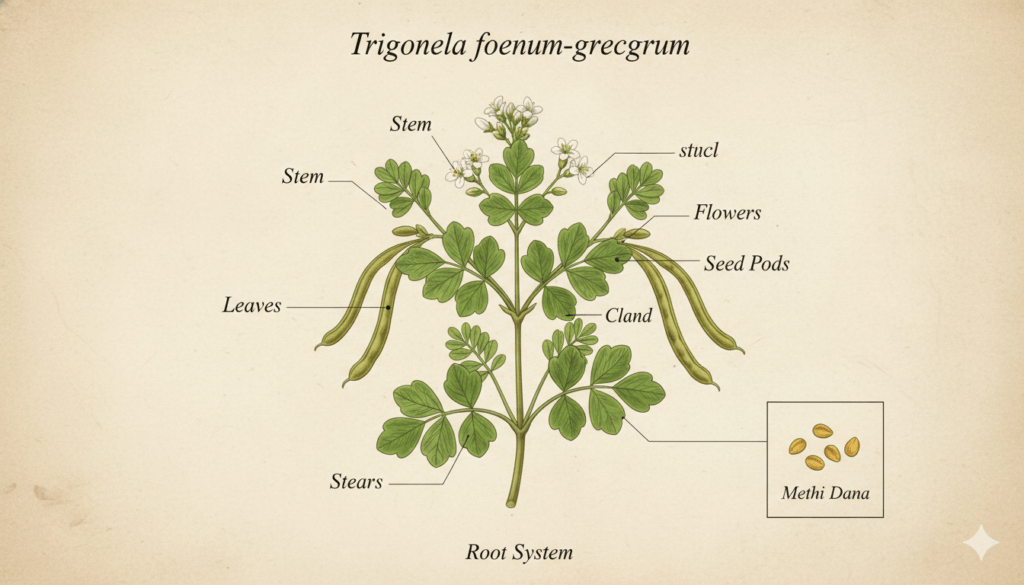
Fenugreek is native to the Mediterranean basin and western Asia, but it has been cultivated across the Indian subcontinent — including what is now Pakistan — for over four thousand years. It grows abundantly throughout Punjab and Sindh, thriving in the same dry, fertile agricultural soils that sustain wheat and mustard cultivation.
Pakistan is among the top producers of fenugreek globally, alongside India, Morocco, and Egypt. The plant grows as an annual herb approximately 60cm tall with trifoliate leaves (the fresh leaves are used as a vegetable — methi saag), small white flowers, and the characteristic long, slender seed pods containing 10–20 golden-brown, rhomboid seeds.
Both the fresh leaves and dried seeds are used in Pakistani cuisine — from aloo methi to methi paratha — making fenugreek one of the most culturally embedded herbs in the Pakistani diet. This culinary familiarity means that using fenugreek for hair care feels natural and accessible in a way that more exotic herbs do not.
Fenugreek in Ayurvedic and Unani Medicine
In Ayurvedic medicine, fenugreek is classified as ushna (heating) in virya (potency) and katu (pungent) in rasa (taste), with a madhura (sweet) post-digestive effect. It is categorised as a balya (strength-promoting) and vrishya (reproductive tonic) herb — properties connected to its phytohormonal activity.
In Unani medicine — the system most deeply embedded in Pakistani medical tradition — fenugreek (Hulba) is classified as Muqawwi (strengthening), Muhallil (anti-inflammatory), and Mufatteh (deobstruent — opening blockages in channels). Its use for hair fall in classical Unani texts references its ability to nourish balgham (phlegm) constitution — associated with heaviness, moisture, and the type of slow, dull scalp energy that produces weak, falling hair.
The modern translation of this traditional understanding: fenugreek stimulates metabolic activity in follicle-supporting tissues, reduces local inflammation, and provides direct nutritive compounds that sustain hair growth.
Fenugreek Chemical Compounds That Directly Benefit Hair Growth
Diosgenin – The Phytohormone That Addresses Androgenetic Hair Loss
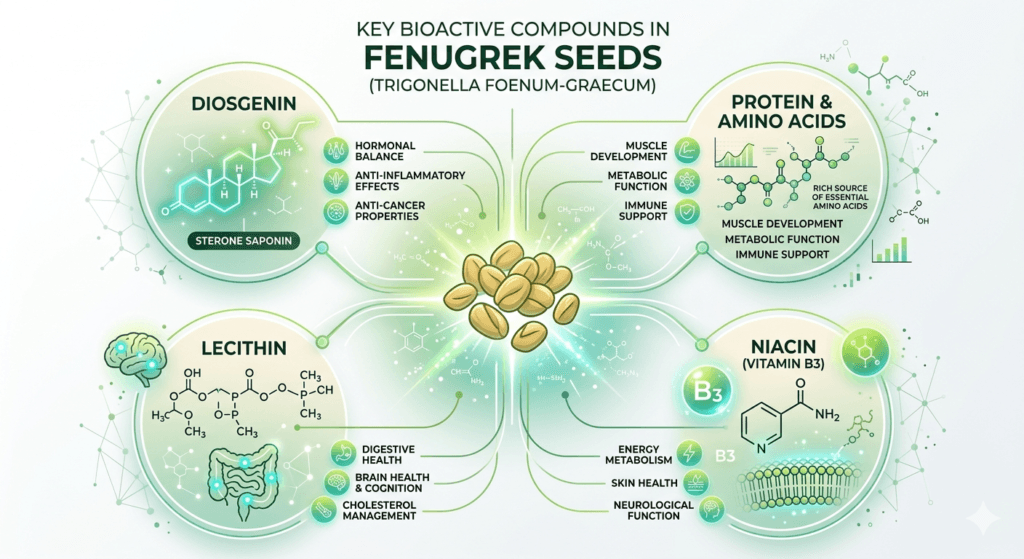
Diosgenin is a steroidal saponin found in significant concentrations in fenugreek seeds and is arguably its most pharmacologically significant compound for hair health. Diosgenin is a phytoestrogen — a plant-derived compound that interacts with oestrogen receptors in mammalian tissue without being an oestrogen itself.
For hair biology, this is relevant in two ways. First, in women experiencing hair fall related to hormonal imbalance — including post-menopausal oestrogen decline, PCOS-related androgen excess, or post-partum hormonal shifts — diosgenin’s mild oestrogenic activity may help counter the androgenic environment that drives follicle miniaturisation. Second, diosgenin has been studied for its potential to inhibit 5-alpha reductase — the enzyme that converts testosterone to DHT, the primary driver of androgenetic hair loss in both men and women.
A study published in the International Journal of Medical Research and Health Sciences found that fenugreek seed extract supplementation over 6 months produced significant improvements in hair volume and scalp coverage — outcomes consistent with reduced androgenic pressure on follicles.
Nicotinic Acid (Niacin / Vitamin B3) – Vasodilation and Follicle Nutrition
Fenugreek seeds contain meaningful concentrations of nicotinic acid — Vitamin B3 — which plays a specific and important role in hair follicle health. Nicotinic acid is a potent vasodilator: it widens blood vessels and increases blood flow to the area of application or supplementation.
For scalp follicles, improved circulation means more oxygen and nutrients delivered to the dermal papilla — the cluster of cells at the base of each follicle that controls hair growth initiation. Nicotinic acid applied topically (as in a fenugreek paste or rinse) and consumed internally stimulates local microcirculation, directly supporting the anagen growth phase.
A 2003 study published in Dermatology found that topical nicotinic acid derivatives significantly increased hair fullness through vasodilatory mechanisms — providing scientific support for the traditional practice of applying fenugreek paste to the scalp.
Protein and Essential Amino Acids – Direct Follicle Building Blocks
Fenugreek seeds are approximately 23–26% protein by dry weight — a remarkably high protein content for a seed used primarily as a spice. More significantly, fenugreek protein contains a balanced profile of essential amino acids including lysine, tryptophan, and leucine — all involved in keratin synthesis.
Keratin — the structural protein of the hair shaft — is assembled from amino acids provided by the diet and local tissue metabolism. Fenugreek’s direct amino acid contribution, when applied as a paste to the scalp, provides follicle cells with precursor material for keratin synthesis. When consumed internally, it contributes to the overall dietary protein pool that sustains hair growth.
Lecithin – Natural Hair Conditioning and Moisture Retention
Fenugreek seeds are rich in lecithin — a phospholipid that is a natural emollient and conditioning agent. Lecithin strengthens and moisturises the hair shaft, reducing brittleness and mechanical breakage. It also provides a natural coating that improves shine and manageability.
This is why freshly applied fenugreek paste leaves hair noticeably softer and more lustrous after a single application — the lecithin component immediately conditions the hair shaft regardless of longer-term follicle effects.
Mucilage – Scalp Soothing and Anti-Inflammatory Properties
Fenugreek seeds contain a significant proportion of mucilaginous polysaccharides — water-soluble gel-forming fibres that, when the seeds are soaked in water, produce the characteristic thick, slippery gel.
This mucilage has soothing, anti-inflammatory properties when applied to the scalp. It forms a protective coating over irritated or inflamed scalp skin, reduces the intensity of inflammatory signalling around follicles, and provides a gentle mechanical barrier against environmental irritants. For those with dandruff, eczema, or sensitive scalp conditions, the mucilage component of fenugreek is particularly beneficial.
Iron, Zinc, and Magnesium – Micronutrient Support for Hair Follicles
Fenugreek seeds contain meaningful amounts of iron (13.4mg per 100g), zinc, and magnesium — three micronutrients with documented roles in hair follicle health. Iron supports oxygen delivery to metabolically active follicle tissue. Zinc regulates follicle cell proliferation and sebaceous gland function. Magnesium is involved in over 300 enzymatic reactions including those governing protein synthesis in follicle cells.
When consumed regularly as part of the diet — as methi dana in cooking or as soaked seeds eaten directly — fenugreek contributes to the micronutrient foundation that sustains healthy hair growth.
Fenugreek Seeds for Hair Growth – What Research Shows
Clinical Evidence for Fenugreek and Hair Growth
The clinical research base for fenugreek and hair growth, while not as extensive as for rosemary, is growing and generally supportive of traditional use.
The most significant published clinical trial on fenugreek for hair — conducted by Agrawala et al. and published in the International Journal of Medical Research and Health Sciences — was a randomised, double-blind study involving participants with self-reported hair thinning. The fenugreek seed extract group showed statistically significant improvements in hair volume, hair thickness, and scalp coverage compared to placebo over 6 months. Importantly, the improvements were observed in both men and women, with the effect more pronounced in participants with earlier-stage thinning.
A separate in vitro study published in Phytomedicine demonstrated that fenugreek seed extract promoted dermal papilla cell proliferation — the cells at the base of follicles that initiate and sustain hair growth — in a dose-dependent manner.
Research on nicotinic acid (Vitamin B3), one of fenugreek’s key active compounds, shows consistent evidence for improving scalp blood flow and hair density when applied topically — mechanistically supporting the traditional practice of fenugreek paste application.
Supporting Evidence from Traditional Medicine Research
A systematic review published in the Journal of Ethnopharmacology examining Ayurvedic and Unani treatments for hair loss concluded that fenugreek was among the herbs with the most consistent traditional documentation across multiple regional traditions — an indicator of genuine effectiveness that often precedes formal clinical validation.
Honest Assessment of Current Evidence
The evidence for fenugreek is encouraging and mechanistically well-supported but requires more large-scale clinical trials to reach the level of certainty that rosemary has achieved. The individual compounds — diosgenin, nicotinic acid, protein, lecithin — each have independent scientific support. The combination of these in a single, accessible, affordable seed is what makes fenugreek an exceptional value proposition for natural hair care.
Fenugreek for Specific Hair Problems in Pakistan

Methi Dana for Hair Fall – Addressing Hormonal and Nutritional Causes
Hair fall (baal jharna) is the most common hair concern in Pakistan, and fenugreek addresses it through multiple simultaneous pathways. Its diosgenin content provides mild anti-androgenic activity relevant to hormonal hair fall. Its nicotinic acid improves scalp circulation. Its protein content supports keratin synthesis. Its iron and zinc content addresses the nutritional deficiencies that are among the most prevalent causes of hair fall in the Pakistani population.
This multi-pathway action is what makes fenugreek particularly valuable — it is not a single-mechanism herb but a nutritional and therapeutic package that addresses several common causes of hair fall simultaneously.
Fenugreek Seeds for Hair Growth in Pakistani Women
Pakistani women face a distinct pattern of hair fall challenges: iron deficiency anaemia from menstrual losses and dietary patterns, PCOS-related androgenic hair fall affecting 12–18% of women of reproductive age, post-partum telogen effluvium following delivery, and nutritional deficiencies from diet. Fenugreek addresses all of these through its combined iron content, phytoestrogen activity, protein provision, and anti-inflammatory properties.
For post-partum hair fall in particular — which is extremely common and extremely distressing for Pakistani mothers — fenugreek has strong traditional support across South Asian cultures and a mechanistic basis in its hormonal and nutritional activity.
Fenugreek for Dandruff-Related Hair Fall
Fenugreek’s antifungal properties — documented against Candida and Aspergillus species — extend to activity against Malassezia yeast, the organism responsible for dandruff and seborrhoeic dermatitis. Dandruff-related scalp inflammation is significantly underdiagnosed as a cause of hair fall in Pakistan. Regular fenugreek paste application addresses this fungal load while simultaneously conditioning the scalp and reducing inflammation.
Fenugreek Seeds for Hair Thickness and Volume
Even for those not experiencing significant hair fall, fenugreek improves the appearance and texture of existing hair through its lecithin content and protein coating properties. Regular users of fenugreek hair masks consistently report increased hair thickness, reduced breakage, improved shine, and better manageability — outcomes that the mucilage and lecithin components explain even in the absence of significant new hair growth.
How to Stop Hair Fall Naturally: The Complete Pakistan Guide
How to Use Fenugreek for Hair Growth – 5 Proven Methods
Method 1 – Fenugreek Hair Mask (Most Effective Topical Method)
This is the most traditional and widely used method — and also the one with the best combination of research support and practical simplicity.
What you need:
- 3–4 tablespoons of fenugreek seeds (methi dana)
- Water for soaking
- 2–3 tablespoons of plain yoghurt (optional but recommended)
- A few drops of rosemary or coconut oil (optional enhancement)
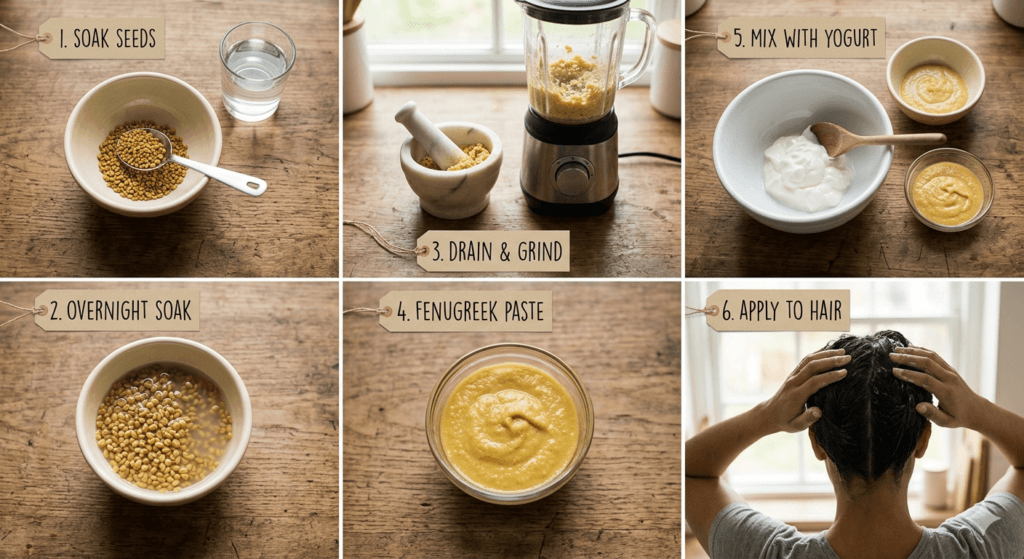
Method: Soak the fenugreek seeds in sufficient water to cover them completely for 8–12 hours or overnight. The seeds will swell and the water will become thick and slightly gelatinous — this is the mucilage releasing.
Drain the seeds and grind to a smooth paste using a blender or food processor. Add yoghurt if using — the lactic acid in yoghurt gently exfoliates the scalp, the protein provides additional conditioning, and the consistency makes the paste easier to apply. Mix thoroughly.
Apply the paste directly to the scalp, parting hair into sections to ensure even coverage. Massage gently for 5 minutes. Apply any remaining paste to the hair shaft. Cover with a shower cap or wrap with a towel to maintain warmth and prevent dripping. Leave for 30–45 minutes. Rinse thoroughly with lukewarm water, then shampoo gently.
Frequency: Once or twice weekly.
Important: Do not leave fenugreek paste on for more than one hour. Extended contact can cause scalp dryness in some individuals due to the astringent properties.
Method 2 – Fenugreek Seed Water Rinse
This method captures the water-soluble compounds — nicotinic acid, mucilage, and water-soluble proteins — in a gentle, leave-in rinse that is particularly suitable for those with fine hair or oily scalps who find the paste too heavy.
Preparation: Boil 3–4 tablespoons of fenugreek seeds in 500ml of water for 15–20 minutes. Remove from heat, cover, and allow to cool completely. Strain carefully to remove all seed particles.
Application: After shampooing and conditioning as normal, pour the fenugreek seed water slowly over the scalp and hair. Massage gently for 2–3 minutes. Do not rinse out — leave in and style as normal.
Frequency: 3–4 times per week. The leave-in rinse maintains a continuous low-level delivery of nicotinic acid and anti-inflammatory compounds to the scalp between mask treatments.
Method 3 – Fenugreek Infused Oil for Hair
Fenugreek-infused oil combines the scalp circulation benefits of oil massage with the specific active compounds of fenugreek seeds in a format that penetrates the scalp and hair shaft more effectively than water-based preparations.
Cold infusion method: Fill a clean glass jar halfway with whole fenugreek seeds. Cover completely with coconut oil (for penetration and protein retention) or sesame oil (for scalp warming and traditional Ayurvedic authenticity). Seal tightly and place in a warm location — a sunny windowsill works well in Pakistan’s climate. Leave for 3–4 weeks, shaking or stirring daily. Strain thoroughly.
Heat infusion method (faster): Combine 3–4 tablespoons of fenugreek seeds with 200ml of coconut or sesame oil in a double boiler over very low heat. Maintain for 2 hours, stirring occasionally. The oil will turn a golden-amber colour as it absorbs the seed compounds. Strain and cool completely before bottling.
Application: Apply to scalp and hair 2–3 times weekly. Massage for 5–10 minutes using circular fingertip pressure. Leave for 2+ hours or overnight. Wash out with a gentle shampoo.
Method 4 – Consuming Fenugreek Seeds for Hair (Internal Method)
Eating fenugreek seeds provides systemic benefits — contributing iron, zinc, protein, and diosgenin to the body through the digestive system — in a way that topical application cannot replicate.
Soaked seed method (most digestively gentle): Soak one tablespoon of fenugreek seeds overnight in water. Eat the swollen seeds first thing in the morning on an empty stomach, followed by the soaking water. The overnight soaking reduces the intensity of bitter flavour and improves digestive tolerance by reducing phytic acid content.
Powder in warm water or milk: Grind dried fenugreek seeds to a fine powder. Add half a teaspoon to warm water, milk, or a smoothie once daily.
In cooking: The simplest and most sustainable method — regularly incorporate methi dana into everyday Pakistani cooking. Tarka daal with whole fenugreek seeds, aloo methi, and methi paratha all deliver meaningful amounts of the seeds’ active compounds through the diet.
Note on taste: Fenugreek seeds are distinctly bitter. This bitterness is reduced significantly by soaking, roasting, or cooking. Raw, unsoaked seeds eaten in large quantities can cause digestive discomfort — begin with small amounts and increase gradually.
Method 5 – Fenugreek and Amla Combined Hair Pack
This combination targets hair fall from multiple simultaneous pathways — fenugreek’s follicle nutrition and anti-androgenic activity combined with amla’s Vitamin C, collagen support, and 5-alpha reductase inhibition.
What you need:
- 2 tablespoons soaked and ground fenugreek seeds
- 2 tablespoons amla powder (or fresh amla paste)
- 1 tablespoon coconut oil
- Water to adjust consistency
Method: Mix all ingredients into a smooth paste. Apply to scalp and hair. Leave for 30–40 minutes. Rinse with lukewarm water and shampoo gently.
Frequency: Once weekly.
[LINK: amla-reetha-shikakai-hair-oil] — Complete guide to amla for hair growth and fall prevention
Fenugreek for Hair – Dosage and Frequency Guide
| Method | Amount | Frequency | Best For |
|---|---|---|---|
| Hair mask (paste) | 3–4 tbsp seeds | 1–2x per week | Hair fall, thinning, dandruff |
| Seed water rinse | 4 tbsp seeds / 500ml water | 3–4x per week | Fine hair, oily scalp, conditioning |
| Infused oil | 3–4 tbsp seeds / 200ml oil | 2–3x per week | Dry scalp, penetrating treatment |
| Internal – soaked seeds | 1 tbsp overnight soaked | Daily (morning) | Systemic nutritional support |
| Internal – in cooking | Regular dietary use | Daily | Most sustainable long-term |
| Combined amla pack | 2 tbsp each | 1x per week | Maximum anti-hair fall effect |
Fenugreek Hair Mask – Common Mistakes to Avoid
Using dry seeds without soaking. Unsoaked seeds do not grind smoothly and the mucilage has not fully released. Always soak for minimum 8 hours.
Leaving the mask on too long. More than 60 minutes increases the risk of scalp dryness from the astringent compounds. 30–45 minutes is optimal.
Applying to dry hair only. Slightly damp hair — not wet — allows better distribution of the paste and prevents excessive dripping.
Expecting overnight results. Fenugreek works through cumulative application over weeks and months. Weekly masks for 3–6 months produce the most meaningful results.
Not straining the seed water thoroughly. Seed particles left in the rinse water can tangle in hair and are difficult to remove. Use fine cheesecloth or a muslin cloth for straining.
Safety and Precautions – Who Should Be Careful with Fenugreek
Fenugreek has an exceptional safety profile for topical hair use and is safe for the vast majority of people. The following precautions apply:
Pregnancy: Fenugreek is traditionally used to stimulate uterine contractions at high doses — it has historical use as an emmenagogue. Pregnant women should avoid consuming large therapeutic amounts of fenugreek seeds. Normal culinary amounts in cooking (as used in everyday Pakistani food) are generally considered safe. Topical use on scalp and hair is considered low-risk as systemic absorption is minimal.
Blood sugar medication: Fenugreek has documented hypoglycaemic effects — it lowers blood sugar levels. People on diabetes medication should monitor blood sugar carefully if consuming therapeutic amounts of fenugreek seeds and consult their doctor.
Blood thinning medication: Fenugreek may have mild anticoagulant activity. Those on warfarin or other blood thinners should exercise caution with therapeutic internal doses.
Legume allergy: As a member of the Fabaceae family, individuals with documented allergy to peanuts, chickpeas, or other legumes may have cross-reactive sensitivity to fenugreek. Perform a patch test before first topical application.
Maple syrup urine disease: Fenugreek gives a characteristic maple syrup odour to sweat and urine in some individuals — a harmless, temporary effect but one that can be confused with the metabolic disorder maple syrup urine disease in infants. It is a well-known and benign side effect of regular fenugreek consumption.
Key Takeaways – Fenugreek for Hair Growth
- Fenugreek (Trigonella foenum-graecum / Methi) is a 4,000-year-old South Asian herb with both deep cultural roots in Pakistan and growing scientific validation for hair growth and fall prevention
- Its primary active compounds for hair — diosgenin (phytoestrogen, 5-alpha reductase inhibitor), nicotinic acid (scalp vasodilator), protein (keratin precursors), lecithin (conditioning), and mucilage (anti-inflammatory) — work through multiple simultaneous pathways
- Clinical research shows statistically significant improvements in hair volume, thickness, and scalp coverage after 6 months of consistent use
- Topical methods — hair mask, seed water rinse, and infused oil — are the most direct interventions; consuming seeds internally provides systemic nutritional support
- The fenugreek hair mask (soaked seeds ground with yoghurt) applied 1–2 times weekly is the most practical and evidence-consistent method for Pakistani households
- Fenugreek is most beneficial for: hormonal hair fall, nutritional deficiency-related shedding, dandruff-related hair fall, hair thinning, and improving overall hair texture and thickness
- It is safe for most people but should be used with caution during pregnancy (internal use) and by those on diabetes or blood-thinning medication
Frequently Asked Questions – Fenugreek for Hair Growth Pakistan
Does fenugreek (methi) actually grow hair?
Yes, through several documented mechanisms. Diosgenin inhibits 5-alpha reductase (reducing DHT-driven follicle miniaturisation), nicotinic acid increases scalp blood flow (delivering more nutrients to follicles), protein provides keratin building blocks, and anti-inflammatory mucilage reduces the follicle-suppressing inflammation that causes reactive shedding. A clinical trial showed significant improvement in hair volume and scalp coverage after 6 months of consistent use.
How long does fenugreek take to show results for hair growth?
Consistent weekly application of fenugreek hair mask for 8–12 weeks typically produces noticeable improvement in hair texture, shine, and reduced breakage. Meaningful reduction in hair fall and improvement in hair density requires 3–6 months of regular use — consistent with the biology of the hair growth cycle which operates on a 3–6 month timescale.
Can I use fenugreek for hair every day?
Daily use of fenugreek seed water rinse (leave-in) is generally well-tolerated. Daily application of fenugreek paste is not recommended as the astringent properties can cause scalp dryness with excessive frequency. Eating fenugreek seeds daily in normal culinary amounts is perfectly safe and provides ongoing internal nutritional support.
Does methi dana help with hair fall specifically?
Yes — methi dana addresses hair fall through multiple pathways simultaneously. It reduces DHT activity (hormonal hair fall), improves scalp circulation (weak follicle-related fall), provides iron and zinc (nutritional deficiency fall), and reduces scalp inflammation (dandruff-related fall). It is one of the few single ingredients that addresses multiple root causes of hair fall at once.
Can I mix fenugreek with other herbs for hair?
Absolutely — fenugreek combines excellently with other hair herbs. The most effective combinations are: fenugreek with amla (adds Vitamin C and stronger DHT inhibition), fenugreek with rosemary oil (adds clinical-grade DHT blocking and scalp circulation), and fenugreek with coconut oil (adds protein-loss prevention and deep conditioning). These combinations are synergistic — each herb addresses different pathways.
Is fenugreek safe for hair during pregnancy?
Topical application of fenugreek on the scalp and hair during pregnancy is considered low-risk, as systemic absorption through intact skin is minimal. However, consuming large therapeutic amounts of fenugreek seeds internally during pregnancy should be avoided due to its traditional association with uterine stimulation. Normal culinary amounts in everyday cooking are generally considered safe. Consult your gynaecologist if you have any concerns.
What does fenugreek smell like on hair and how do I remove it?
Fenugreek has a distinctive, somewhat strong, earthy-sweet smell that some people find pleasant and others less so. The smell dissipates completely once the hair is washed. A thorough shampoo after the mask — sometimes two washes for thick hair — removes all trace of the smell. Adding a few drops of essential oil (lavender, rosemary, or peppermint) to the fenugreek paste before application can help mask the smell during the treatment.
Where can I buy fenugreek seeds in Pakistan?
Methi dana is available at virtually every grocery store (kiryana dukaan), supermarket, and spice market across Pakistan. It is one of the most affordable and universally available seeds in the country. For hair care use, whole dried seeds of any food-grade quality work perfectly — there is no need to purchase expensive supplement-grade fenugreek when the everyday kitchen variety is identical in composition.

Dr. KJ Minhas, M.Phil, DHMS (Diploma in Homeopathic Medicine and Surgery), registered practitioner with the National Council for Homeopathy (NCH) — reviews content for accuracy and safety.